Eco Pack Friend Editorial Team
What Makes Packaging Sustainable? A Practical Life-Cycle Assessment
A package can look environmentally responsible and still waste resources, fail in transit or have nowhere realistic to go after use. For packaging buyers, designers, brand teams and operations managers, understanding what makes packaging sustainable means looking beyond colour, texture and recycling symbols to determine whether a package protects its product with the least practical burden across its entire life.

A package can look environmentally responsible and still waste resources, fail in transit or have nowhere realistic to go after use. For packaging buyers, designers, brand teams and operations managers, understanding what makes packaging sustainable means looking beyond colour, texture and recycling symbols to determine whether a package protects its product with the least practical burden across its entire life.
Key takeaway: Sustainable packaging protects the product, avoids unnecessary material and energy, uses traceable inputs, moves efficiently and reaches a credible reuse or recovery route. No material achieves all of those outcomes automatically.
The most revealing question is not “Is this paper, plastic or compostable?” It is “Which complete packaging system delivers the required product safely, with the lowest supported impacts under the conditions where it will actually be made, transported, used and discarded?”
1. Sustainability Is A System Outcome, Not A Material Label
Packaging sustainability is the balance of product protection, resource use, emissions, circularity and credible evidence across the package’s life. A fibre box is not automatically preferable to a plastic container, just as a recyclable package is not necessarily recovered in practice.
A sustainable packaging life cycle assessment provides a structured way to compare alternatives. It begins by defining the goal, scope and functional unit, then records material and energy flows, evaluates potential environmental impacts and interprets the findings. Assumptions, data limitations and assessment boundaries must remain visible.
The comparison unit matters. Comparing one empty tray with another may favour the lightest option, but comparing the packaging needed to deliver 1,000 undamaged meals can produce a different result. Extra replacements, refrigeration, cleaning, returns and secondary packaging may change the balance.
A sustainable package is not the one with the best-looking material. It is the verified system that delivers the product with the least avoidable burden.
This framework helps explain what makes packaging sustainable. Conclusions can change with the product, manufacturing process, distribution route, number of uses and recovery infrastructure in the destination market.
2. Product Protection Comes Before Superficial Material Reduction
Product protection in sustainable packaging includes structural strength, cushioning, sealing and barriers against moisture, oxygen, grease, light or contamination. These functions can prevent leakage, physical damage, spoilage and avoidable product replacement.
This is particularly relevant for food packaging in Malaysia and Southeast Asia. Heat, humidity, storage conditions and long or multi-stage distribution routes can affect board strength, adhesive performance, seal integrity and shelf life. A change that succeeds in a controlled office trial may behave differently in a hot warehouse or during cross-border transport.
Lightweighting becomes a false economy when it increases failure. Imagine a lighter produce tray that saves a small amount of material but allows more tomatoes to bruise between packing, transport and retail. A slightly heavier or better-shaped tray may use more packaging per unit while lowering the combined impact of damaged produce, replacement deliveries and waste.
Before removing a protective feature, test the complete delivery system. Useful checks include:
- drop, vibration and compression tests under representative loads;
- transport trials on routes the package will actually encounter;
- shelf-life and seal-integrity validation under expected temperature and humidity;
- damage, leakage, return and replacement rates before and after the change; and
- food-contact, hygiene and product-safety requirements that cannot be traded away.
The objective is not maximum packaging. It is enough verified protection to prevent greater losses elsewhere in the system.
3. Material Efficiency Removes Waste Without Removing Function
Sustainable packaging material efficiency means delivering the required performance with less material, volume, toxicity and avoidable complexity. The first priority is usually to eliminate an unnecessary component, layer or format rather than replace it with a different unnecessary component.
Practical options include lightweighting, right-sizing, improving structural geometry, reducing headspace and shipping concentrated products. Better case dimensions may also increase the number of units that fit on a pallet or vehicle, reducing secondary packaging and transport demand.
Empty space deserves attention. Oversized e-commerce cartons consume more board, require more void fill and reduce warehouse and vehicle utilization. Protective space remains justified for fragile, irregular or shock-sensitive products, but it should be established through testing rather than habit.
Small components can determine whether a larger package is recoverable. Heavy coatings, incompatible barrier layers, dark pigments, oversized labels, difficult adhesives and mixed-material closures can reduce sorting or processing value even when each feature represents little weight.
Track material efficiency through several measures rather than one headline percentage:
- package-to-product weight ratio;
- packaging weight and volume per successful delivery;
- product and void-space utilization by case and pallet;
- damage and return rates; and
- the number and compatibility of components.
Waste-management hierarchies generally favour preventing material use before managing waste. Packaging-minimization rules developed in other markets can also provide useful technical reference points, but they should not be presented as Malaysian legal requirements.
4. Responsible Sourcing Requires Traceability
Responsible packaging material sourcing considers where virgin, recycled, reclaimed, renewable and bio-based inputs come from and what processing they require. Feedstock labels alone do not reveal land use, extraction impacts, transport distance, contamination, process yield or technical suitability.
Recycled content can reduce demand for virgin resources, but the outcome depends on the source and quality of the recovered material, additional processing and the performance required. Food-contact applications, high-barrier products and safety-critical uses may have constraints that differ from those of transport packaging.
For paper and board, chain-of-custody certification can track certified or reclaimed forest material through sourcing, manufacturing and distribution. This provides evidence for a defined sourcing claim. It does not prove that the finished package has lower impacts in every category.
Bio-based is also not a synonym for biodegradable, compostable or impact-free. Renewable feedstocks may involve land demand, agricultural inputs or pressure on food systems. Their benefits must be evaluated against the complete supply chain and intended end-of-life route.
When a claim depends on material origin, request supplier declarations, recycled-content calculations, chain-of-custody records and batch-level traceability where practical. Documentation should identify the component covered, calculation method, reporting period and exclusions.
5. Production Impacts Can Hide Behind Identical Packages
Two visually identical packages can have different environmental profiles. Plant efficiency, electricity sources, recycled feedstock, process yield, washing, printing, lamination and curing can change energy use, water demand, waste and pollution without changing the package’s appearance.
A production assessment should cover material inputs, energy and water consumption, saleable yield, scrap, wastewater, air emissions and hazardous inputs. Heavy ink coverage or an additional coating may also add processing stages and complicate material recovery.
Factory scrap should be described precisely. Material sent to a verified recycling process is different from waste that is merely transferred to another contractor. Likewise, a “zero-waste” statement is difficult to evaluate unless it defines which waste streams, facilities, reporting period and treatment methods are included.
Normalize supplier data per saleable package or, preferably, per successfully delivered product. A claimed efficiency improvement is more useful when it states the baseline year, facility, system boundary and allocation method instead of presenting an isolated percentage.
6. Transport Efficiency Depends On More Than Package Weight
Transport performance depends on mass, external dimensions, stackability, case configuration, pallet utilization, damage resistance and transport mode. A small improvement to secondary or tertiary packaging can reduce vehicle movements even when the primary pack remains unchanged.
Malaysian and cross-border Southeast Asian supply chains may connect factories, ports, distribution centres, retailers and last-mile delivery networks. Packaging that performs efficiently at one stage can create wasted space or instability at another. Measurements should therefore follow the actual route.
A compact distribution review connects five levels:
- primary-pack dimensions and protection;
- units per case and unused case volume;
- cases per pallet or transport module;
- vehicle weight and volume utilization; and
- undamaged products delivered per vehicle movement.
Local sourcing is not automatically lower impact. Shorter transport may be offset by poor production yield, heavier packaging or inefficient energy use. Conversely, a distant supplier’s efficient plant does not automatically compensate for additional freight. Both effects belong within the comparison.
Reusable transport packaging adds another layer. Empty units must return for inspection, cleaning and redistribution. Those reverse movements must be counted rather than treated as impact-free.
7. Reuse Works Only When The Package Returns
Reusable packaging environmental impact depends on how many successful rotations a package completes before it is lost, damaged or retired. A durable container carries a larger initial material and manufacturing burden, which must be spread across enough uses to reach its break-even point.
The calculation should include return percentage, loss rate, collection distance, sorting, washing, drying, inspection, redistribution, energy, water and replacement units. “Reusable by design” describes a physical capability. It does not demonstrate participation in an effective reuse system.
Consider the same durable delivery container in two settings. Within a compact urban business-to-business loop, it may return reliably and complete dozens of rotations. Across dispersed routes without deposits or convenient collection, it may return only once. The container is identical, but the result is not.
Closed venues, controlled commercial loops and well-designed deposit systems can support reuse because participants and return points are identifiable. Even then, managers should track average rotations, return rate, rejection rate, wash resources and replacement frequency.
This provides another test of what makes packaging sustainable. Environmental value comes from observed system performance, not the possibility printed on the package.
8. Recyclable Or Compostable Design Is Not Recovery
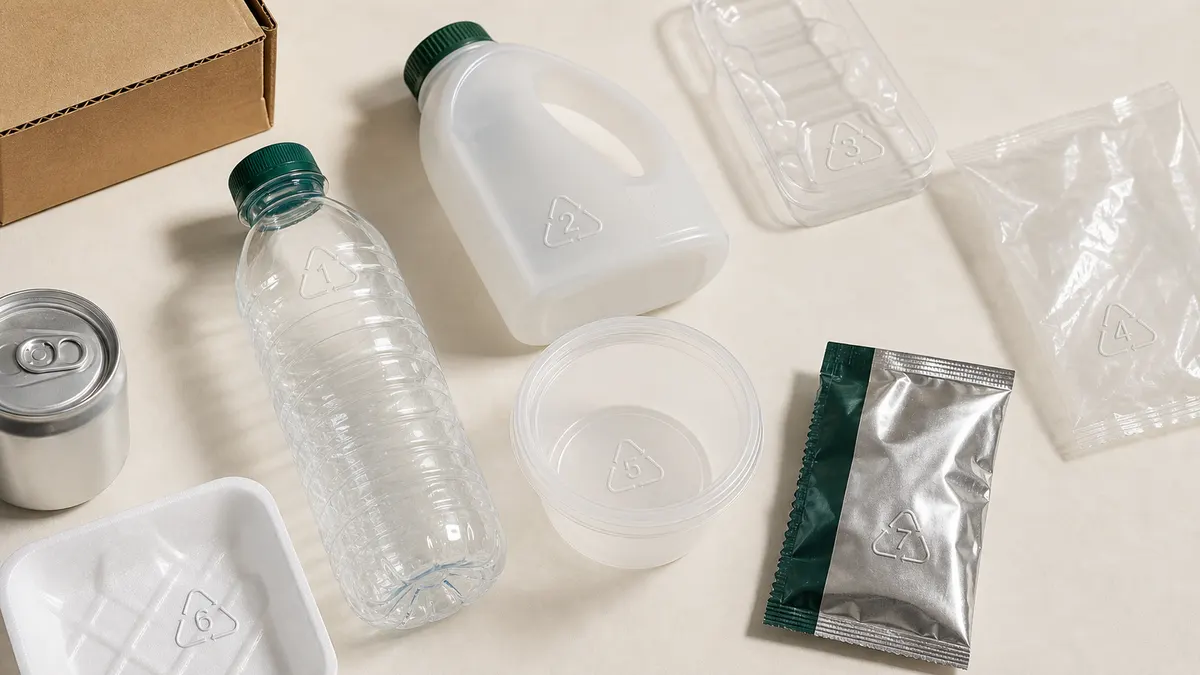
Sustainable packaging end of life is a chain of events: the user separates the package, a service collects it, a facility sorts it, a processor accepts it and a buyer uses the recovered material. If one link is missing, technical recyclability may not produce material recycling.
Recyclable packaging infrastructure varies by material, format and location. In Malaysia, estimates for 2023 indicate that about 22% of all plastic waste and 13% of household plastic waste was collected for recycling. Those figures show why a broad recyclable claim requires local qualification.
Common barriers include food contamination, very small components, incompatible layers, difficult labels and adhesives, and low-value flexible formats. A package may use a resin or fibre that can be processed under ideal conditions while still having limited collection or market demand where it is sold.
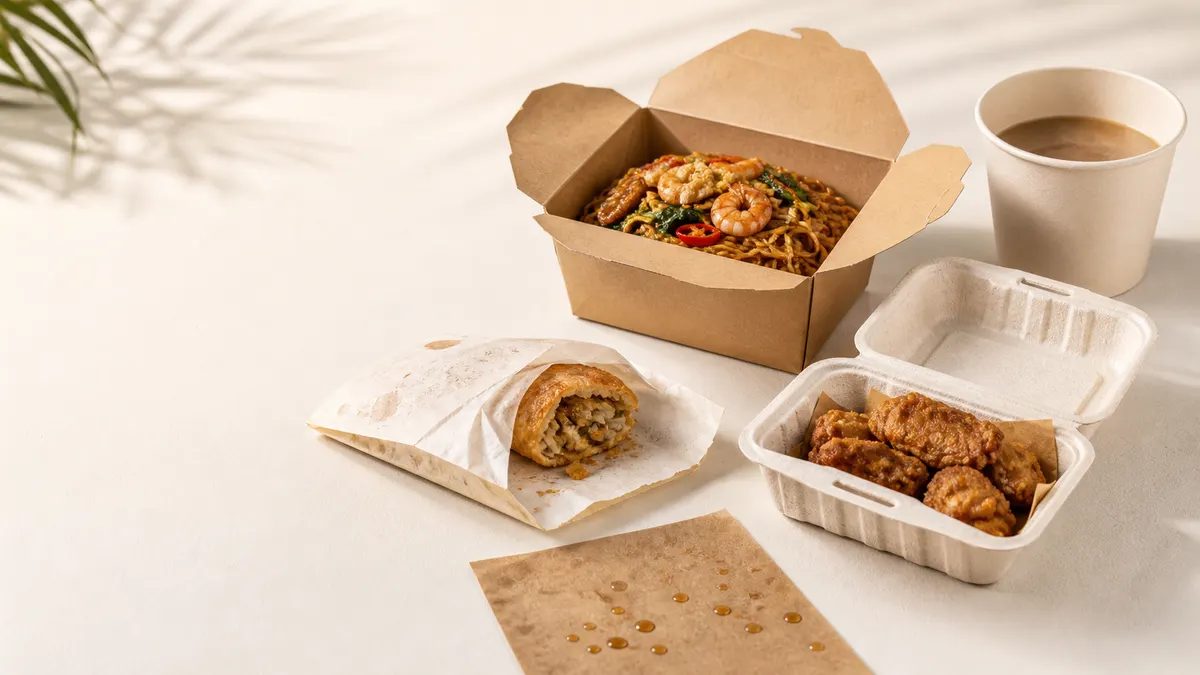
Compostable packaging faces a similar condition. It requires compatible collection and controlled treatment, as well as clear separation from recycling streams. It should not be presented as a universal answer when most customers lack access to the necessary facility.
Distinguish carefully between these statements:
- Designed for recycling: the format was developed to meet specified technical criteria.
- Accepted for collection: local services take the format under stated conditions.
- Materially recycled: collected material is processed into a usable secondary material.
Disposal instructions should match the destination market. Where access is limited or uncertain, say so plainly rather than allowing a symbol to imply a guaranteed outcome.
9. Credible Claims State Their Boundaries And Conditions
Evidence-based packaging sustainability claims are specific, documented and tied to measurable attributes. They identify what was assessed, the method used, the relevant market and the limitations that could affect interpretation.
ISO 14021 packaging claims cover self-declared environmental words, symbols and graphics used on packaging, product literature, advertising and digital platforms. Such claims require appropriate qualification and a documented assessment method. An attractive icon is not evidence by itself.
Replace vague descriptions such as “eco-friendly,” “green” or “planet-safe” with statements that can be checked. Compare:
- Vague: “100% sustainable box.”
- Specific: “The box contains 80% recycled fibre by weight; the calculation method and supplier documentation are available.”
The second statement is narrower and more credible, but it still does not prove superior whole-life performance. Recycled content is one attribute among product protection, manufacturing, distribution, reuse and recovery.
A defensible claim should state the product or component covered, percentage or metric, baseline, method, geography, time period, exclusions and disposal conditions. It should also distinguish independent certification from supplier evidence and self-declaration, explaining what each verification route actually covers.
When data are estimated or unavailable for part of the life cycle, publish the limitation. Honest uncertainty is more useful than false precision.
10. A Practical Scorecard For Packaging Decisions In Malaysia
Use this scorecard before approving a material change, supplier proposal or environmental statement. It turns what makes packaging sustainable into a sequence of decisions that can be tested.
- Define the function. Record protection, safety, hygiene, shelf-life, presentation and handling requirements.
- Set the comparison unit. Compare alternatives per quantity of undamaged product delivered, not per empty package.
- Prevent product loss. Validate performance under representative heat, humidity, storage and transport conditions.
- Remove excess. Eliminate unnecessary components, weight, volume, toxicity and empty space.
- Verify sourcing. Check material origin, supplier records, recycled-content calculations and chain-of-custody evidence.
- Measure production. Include energy, water, yield, scrap, waste and pollution within a defined reporting boundary.
- Optimize distribution. Review case, pallet, vehicle and reverse-logistics efficiency.
- Model reuse honestly. Calculate break-even rotations and use observed return rates when available.
- Check local recovery. Confirm collection, sorting and processing for the format in its Malaysian or Southeast Asian destination market.
- Qualify every claim. State the metric, baseline, scope, evidence, geography and limitations.
A useful decision record places the current package and proposed alternative side by side, identifies missing data and prevents a single attractive attribute from deciding the result. The strongest proposal is the one that maintains product performance while improving the most material verified impacts without shifting a larger burden elsewhere.
Common Questions About Sustainable Packaging
Is Paper Always More Sustainable Than Plastic?
No. The result depends on material quantity, sourcing, production, protective performance, transport, number of uses and actual recovery. A heavier paper format with a difficult coating may perform worse in some conditions, while an unnecessary plastic format may remain unjustified in others.
Does Recyclable Mean The Package Will Be Recycled?
No. Recyclable may describe technical design potential. Actual recycling also requires consumer participation, collection, sorting, compatible processing and demand for the recovered material in the relevant market.
Is Compostable Packaging A Better Choice For Food Service?
Only where it suits the product and a compatible collection and treatment route exists. Without that system, compostable packaging may enter landfill or contaminate a recycling stream rather than deliver its intended outcome.
How Much Packaging Should Be Removed?
Remove material until the next reduction would compromise verified protection, safety, hygiene, handling or recovery. Testing and damage data should define that boundary, not appearance alone.
What Is The First Document To Request From A Supplier?
Ask for evidence supporting the specific claim that influences the decision. Depending on the claim, this may be a recycled-content calculation, chain-of-custody record, test report, manufacturing data set or life-cycle study with a stated scope and functional unit.
Conclusion: Sustainable Packaging Is The Best-Performing Verified System
Sustainable packaging in Malaysia cannot be determined by appearance, one material attribute or a disposal icon. The strongest option protects the product, avoids unnecessary resources, uses traceable inputs, is produced and transported efficiently, and reaches a realistic reuse or recovery pathway.
The practical answer to what makes packaging sustainable is conditional and measurable: performance must be demonstrated across the package and product system, in the locations where that system operates. Environmental statements should be specific enough to test and modest enough to reflect uncertainty.
For the next packaging decision, work through the scorecard before changing materials or approving a claim. Request the missing evidence from suppliers, test performance under real operating conditions and document why the selected system is better for the stated application.
For a closer look at local recovery, read what makes packaging recyclable in practice in Malaysia.
References
- UN Environment Programme: A life-cycle approach to plastic pollution
- ISO 14040:2006: Environmental management, Life cycle assessment, Principles and framework
- Food and Agriculture Organization: Reduce, reuse, recycle, a mantra for food packaging
- US Environmental Protection Agency: Evaluating the Environmental Impacts of Packaging Fresh Tomatoes Using Life-Cycle Thinking and Assessment
- US Environmental Protection Agency: Sustainable Materials Management, Non-Hazardous Materials and Waste Management Hierarchy
- EUR-Lex: Regulation (EU) 2025/40 on packaging and packaging waste
- Forest Stewardship Council: Chain of Custody Certification
- World Bank: Exploring Feedstock Opportunities to Advance Domestic Circularity in Malaysia's Plastic Recycling (Malaysian Plastic Circularity Series, Report #2, 2025)