
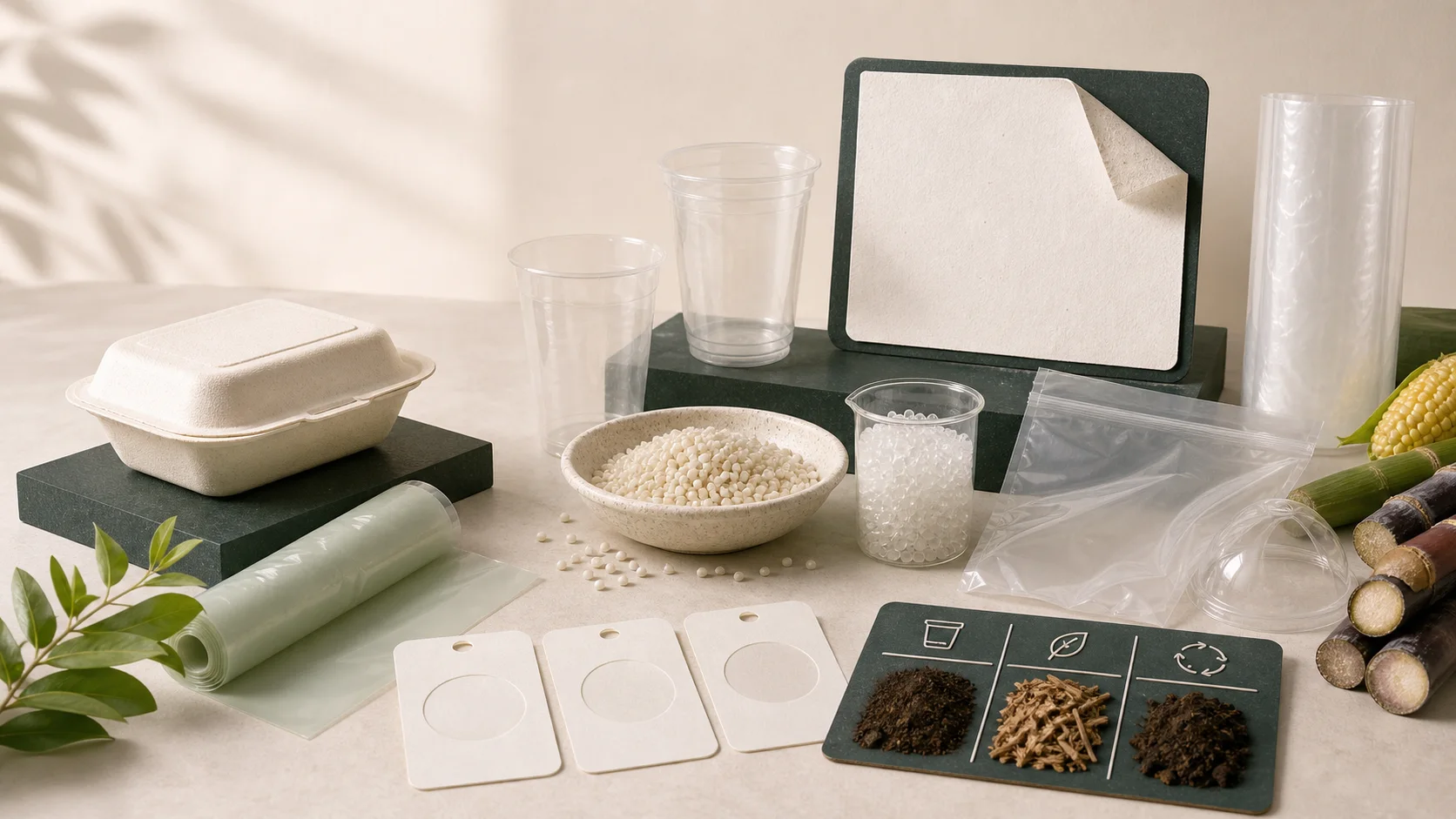
Bioplastic as a claim-sensitive material family
An educational guide to bio-based inputs, compostability claims, resin behavior, food-use context, and disposal routes.
What makes bioplastic different
Bioplastic is not one material. It can describe bio-based input, compostability behavior, or both, depending on resin chemistry and certification context.
Clear study starts with the resin or blend, verified claim, heat tolerance, food-use condition, contamination risk, and the real disposal route available to the user.
Material family, not one material
PLA, PHA, starch blends, bio-PET, and other formats can behave very differently.
Claim depends on conditions
Compostability, bio-based content, and biodegradation each need context, timing, and standards.
End-of-life must be specific
The material claim only helps when it matches actual collection, sorting, or composting access.
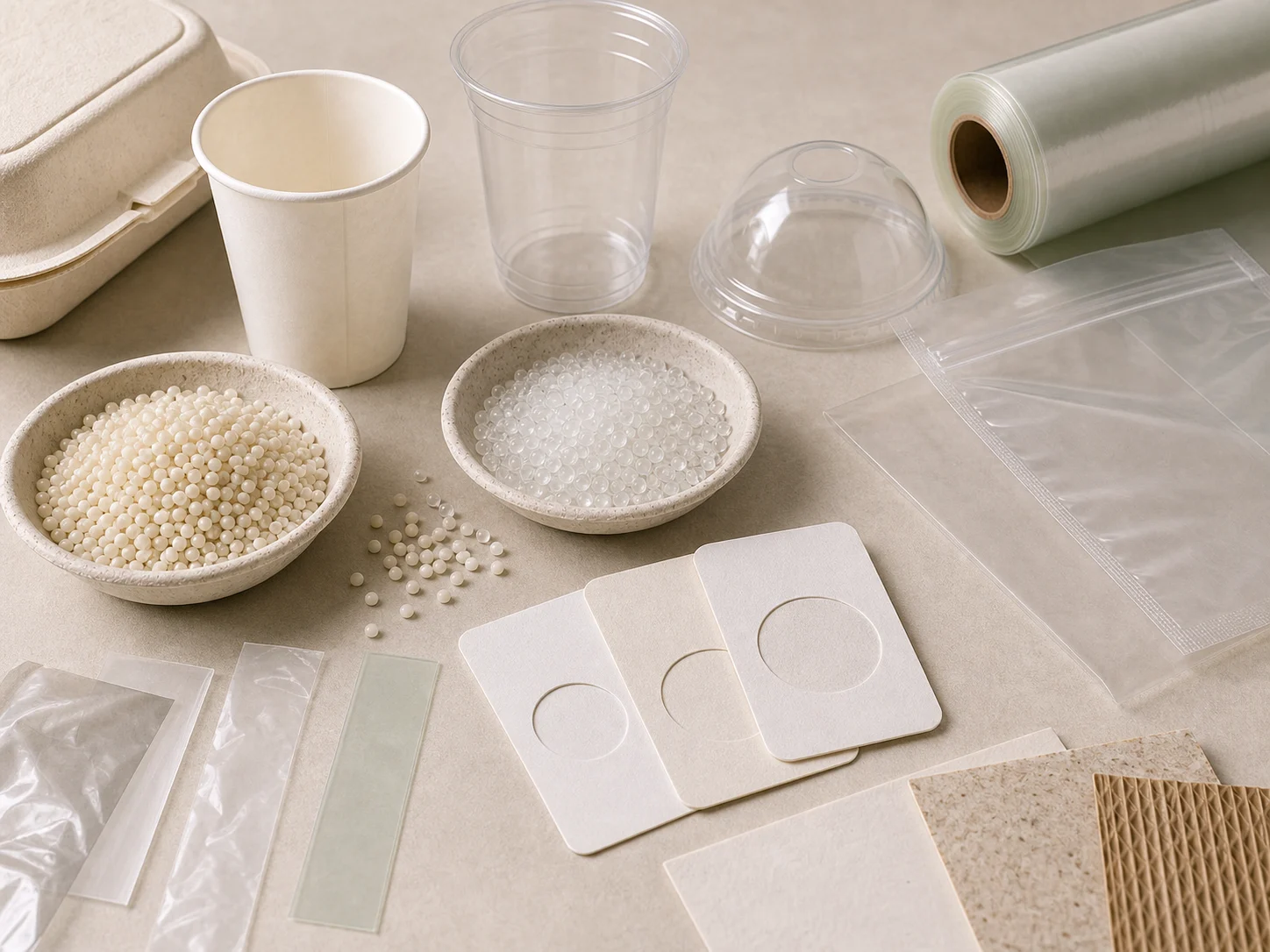
Where bioplastic appears most often
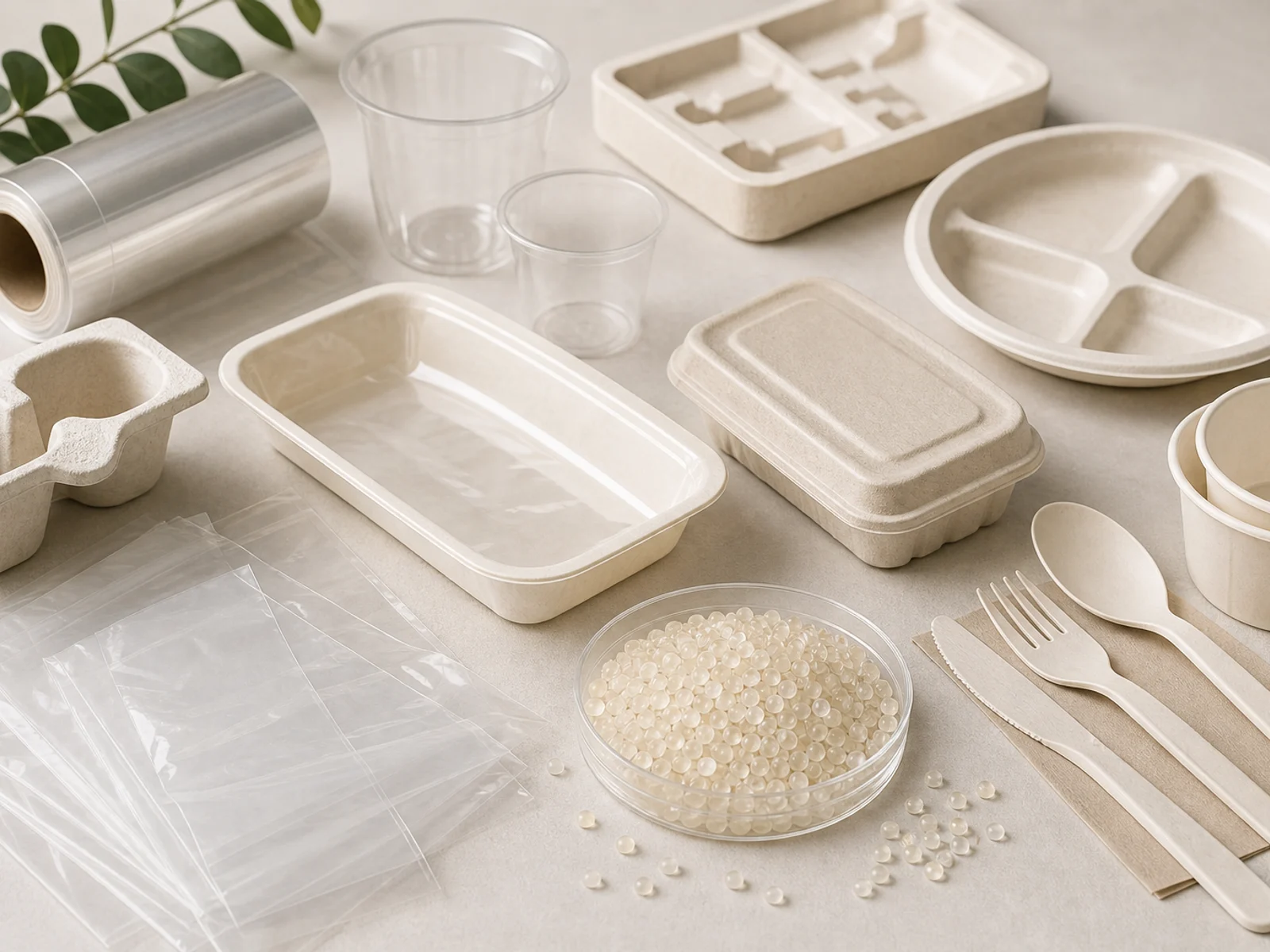
Compostability-linked foodware
Common in cups, lids, containers, cutlery, and liners when processing conditions are defined.
Bio-based flexible film
Used where a thin, flexible layer is paired with a renewable input claim.
Coated paper combinations
Can appear as a lining or barrier layer on fiber-based packaging.
Sustainability claim education
Useful for explaining why material source and disposal behavior are separate questions.
How to study a bioplastic claim
Start with the resin, then verify the claim context, use condition, and disposal access.
Identify the resin or blend
A material name is more useful than a general bioplastic label.
Check certification context
Compostable, bio-based, and biodegradable claims need clear standards and conditions.
Match heat and food use
Hot liquids, oily foods, chilled storage, and direct food-contact conditions need specific review.
Confirm disposal access
A disposal claim is practical only when the matching collection or processing route is available.
Bioplastic packaging FAQs
Short educational answers for bio-based inputs, compostability, and disposal claims.
Is bio-based the same as compostable?
No. Bio-based describes input source, while compostable describes behavior under defined processing conditions.
Can bioplastic be recycled?
Some bio-based plastics match conventional resin streams, while compostable blends may need separate handling. Resin identity matters.
Does compostable mean home compostable?
Not automatically. Industrial composting and home composting are different conditions and need separate claim context.
Can bioplastic touch food?
Food-use suitability depends on the specific resin, additives, coating, temperature, and direct or indirect food-contact condition.