
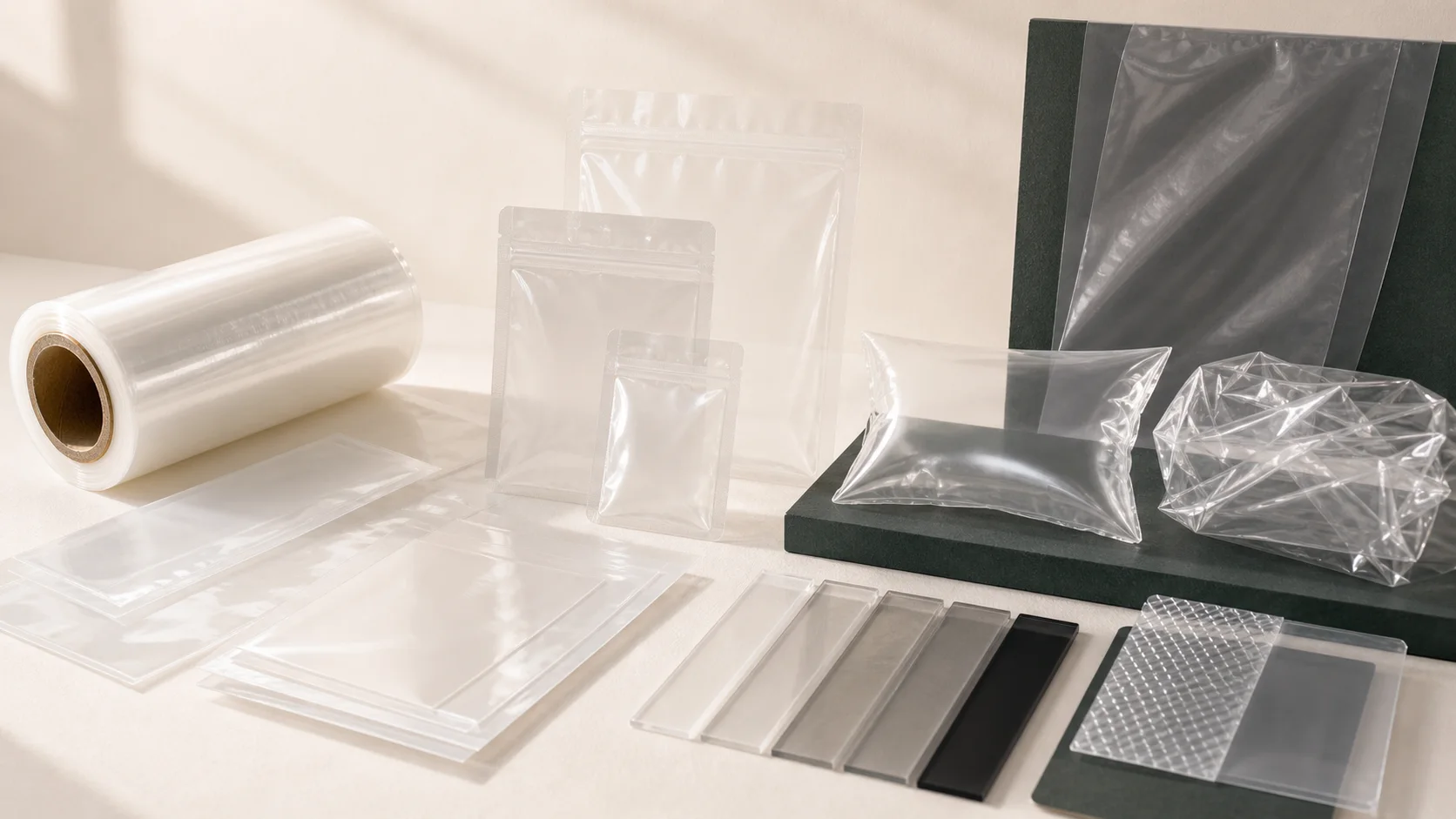
Plastic film as a flexible barrier layer
An educational guide to clarity, sealing, gauge, puncture resistance, moisture barrier, and flexible wrapping uses.
What makes plastic film different
Plastic film is thin, flexible, and often used when visibility, sealing, moisture resistance, or low material weight matters. It can work alone or as a layer in a combined packaging structure.
Its behavior depends on resin type, gauge, orientation, seal layer, puncture resistance, clarity, barrier needs, and the recovery route available after use.
Flexible low-weight format
Film can wrap, line, cover, or pouch products with little bulk compared with rigid materials.
Clarity and product visibility
Transparent film can reveal contents, create windows, or protect labels while keeping products visible.
Seal and barrier behavior
Heat seal, moisture barrier, puncture resistance, and laminate structure determine performance.
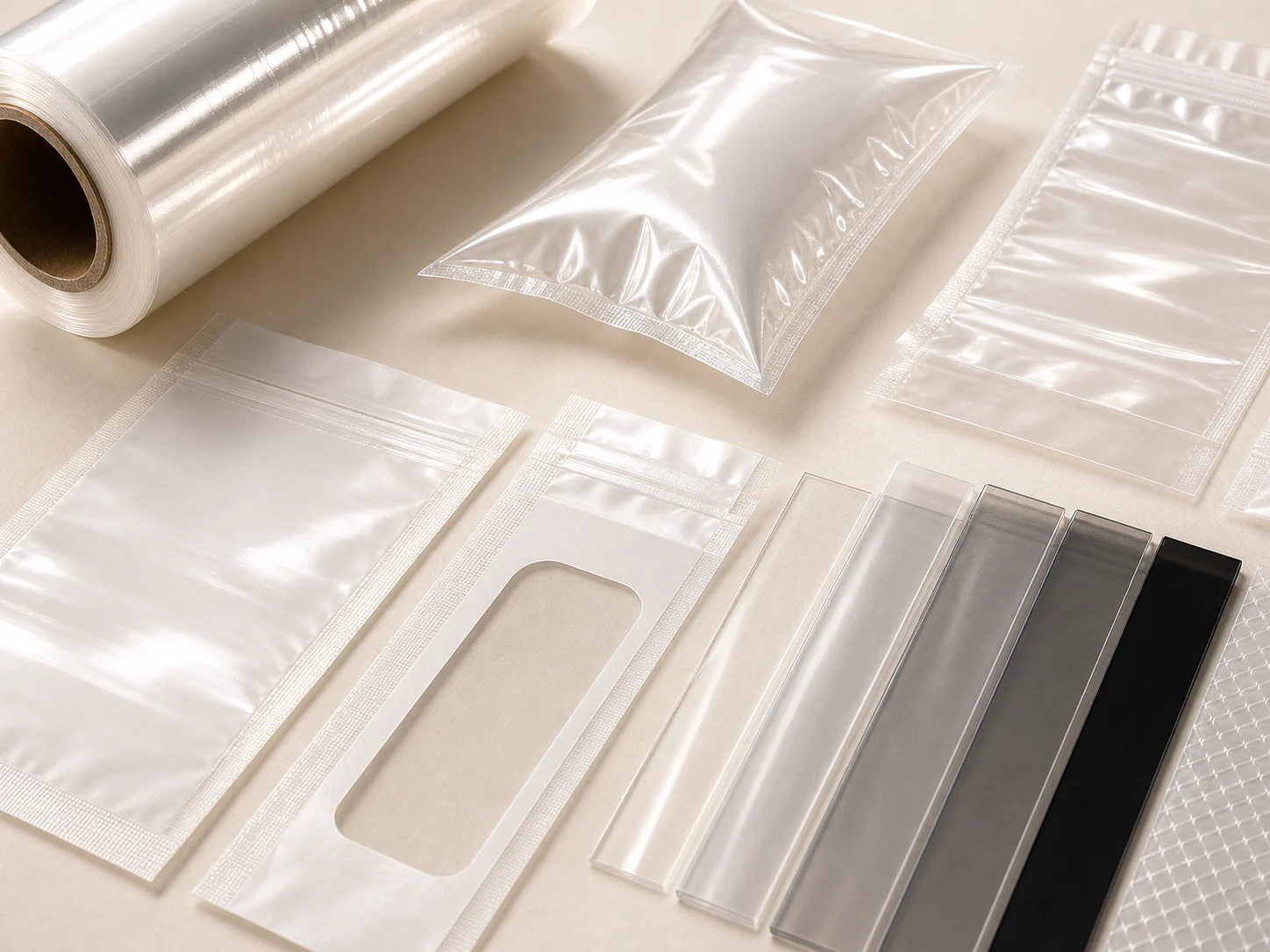
Where plastic film performs best
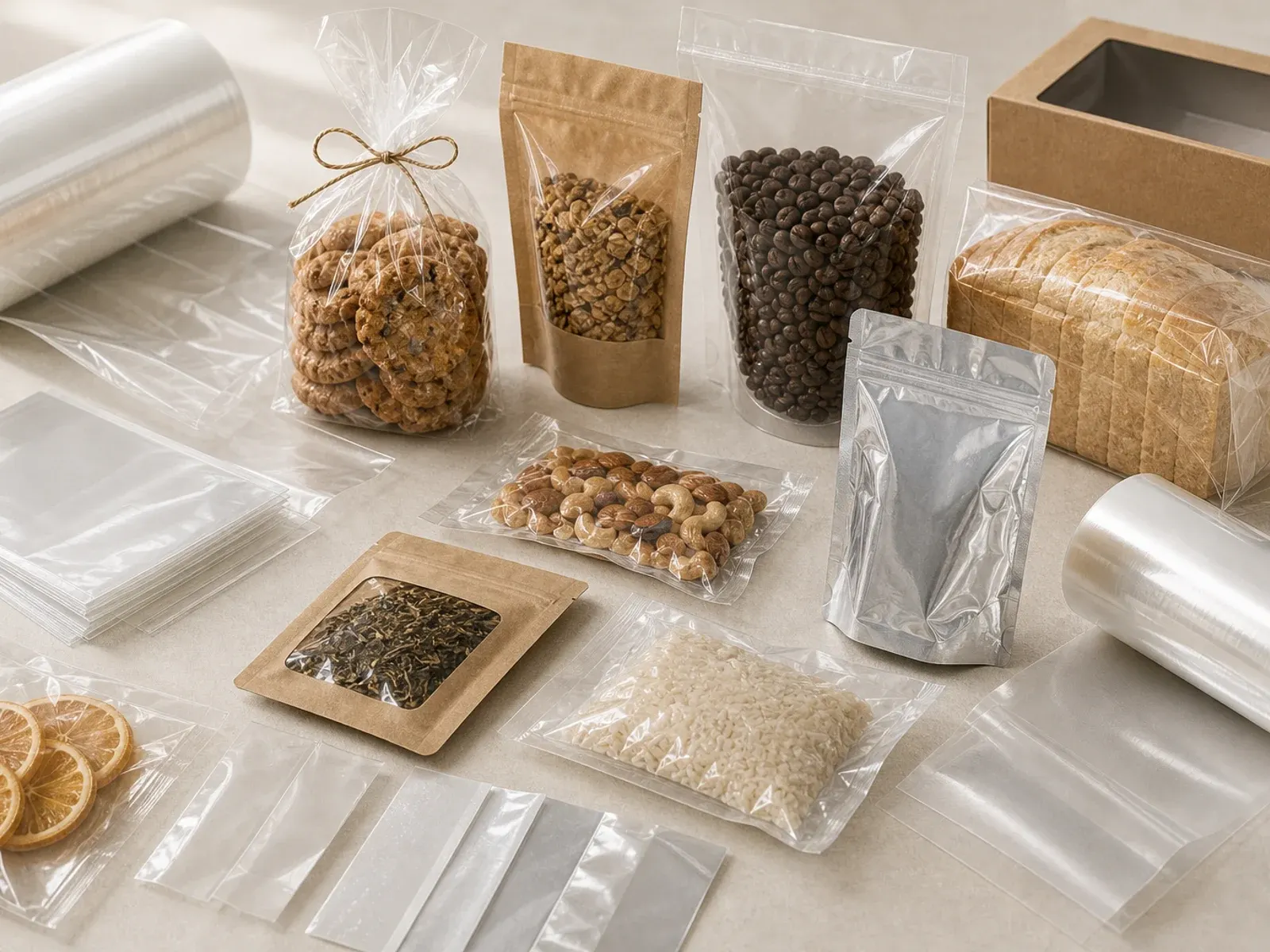
Wraps and overwraps
Adds light protection, bundling, dust control, or tamper-evident surface treatment.
Flexible pouches
Creates lightweight formats where sealing and barrier layers are key design factors.
Windows and visibility panels
Allows a product or texture to remain visible through another packaging material.
Moisture-sensitive liners
Helps protect paper-based structures or dry contents where moisture control matters.
How to study the right plastic film
Define the barrier need, seal method, gauge, and recovery route before comparing film structures.
Define barrier needs
Separate moisture, oxygen, aroma, grease, dust, and handling requirements.
Check seal method
Heat seal, adhesive, zipper, fold, and closure design change usability and performance.
Compare gauge and puncture
Thickness, orientation, and resin blend affect tear behavior and resistance to sharp edges.
Review recovery route
Film recovery depends on resin type, cleanliness, collection access, and whether layers are mixed.
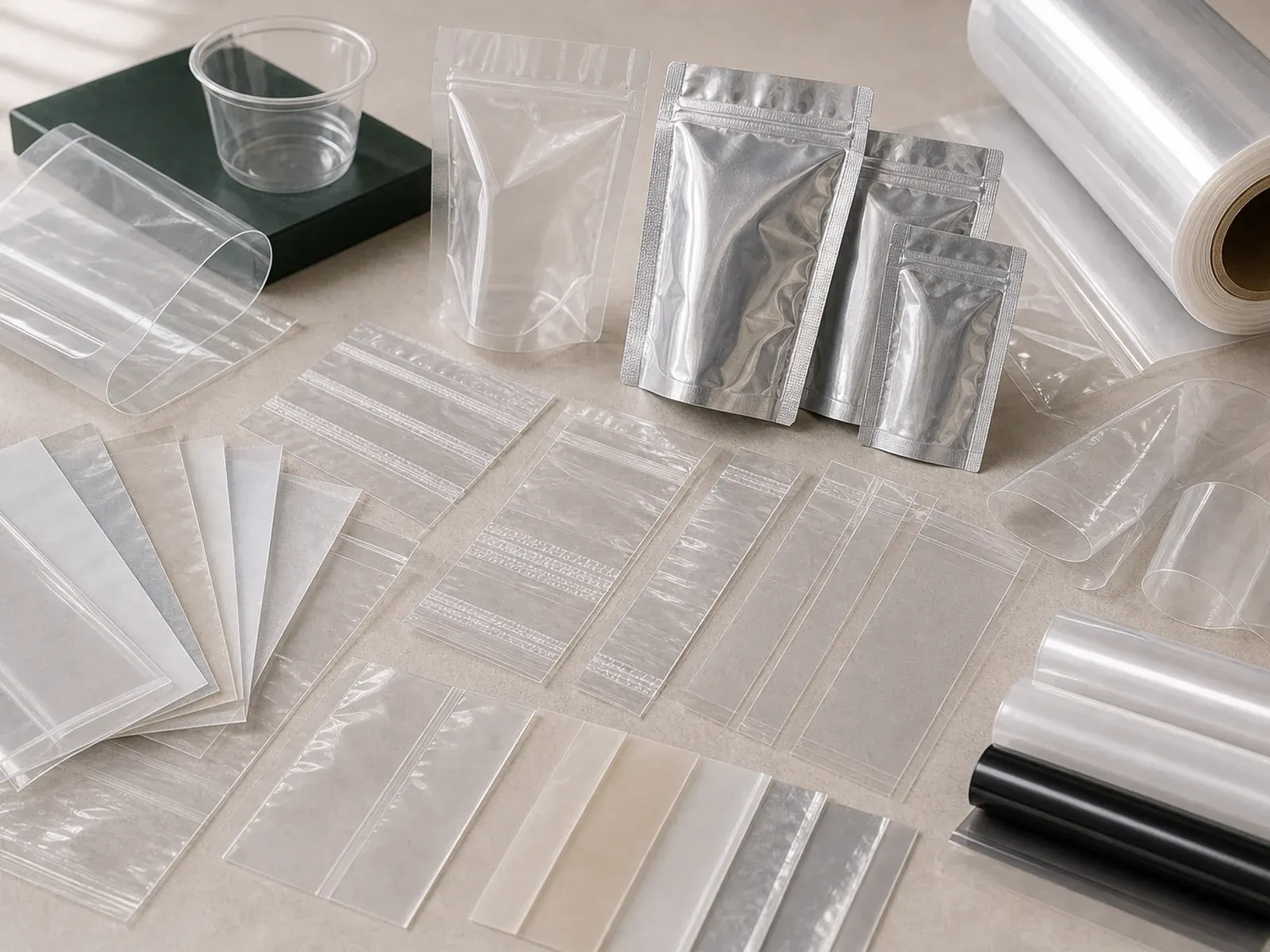
Plastic film packaging FAQs
Short educational answers for flexible film, sealing, and recovery context.
Is plastic film recyclable?
Some mono-material films can be recovered through suitable streams, while mixed layers, residue, or local collection gaps can limit outcomes.
What does film gauge mean?
Gauge describes film thickness. It helps compare weight and feel, but resin type and orientation also affect strength.
Why are some films laminated?
Laminates combine layers for barrier, sealability, print protection, strength, or clarity, but they can complicate recovery.
When is plastic film useful in paper-based packaging?
Film can add a window, liner, moisture layer, or seal where paper alone cannot meet the use condition.