
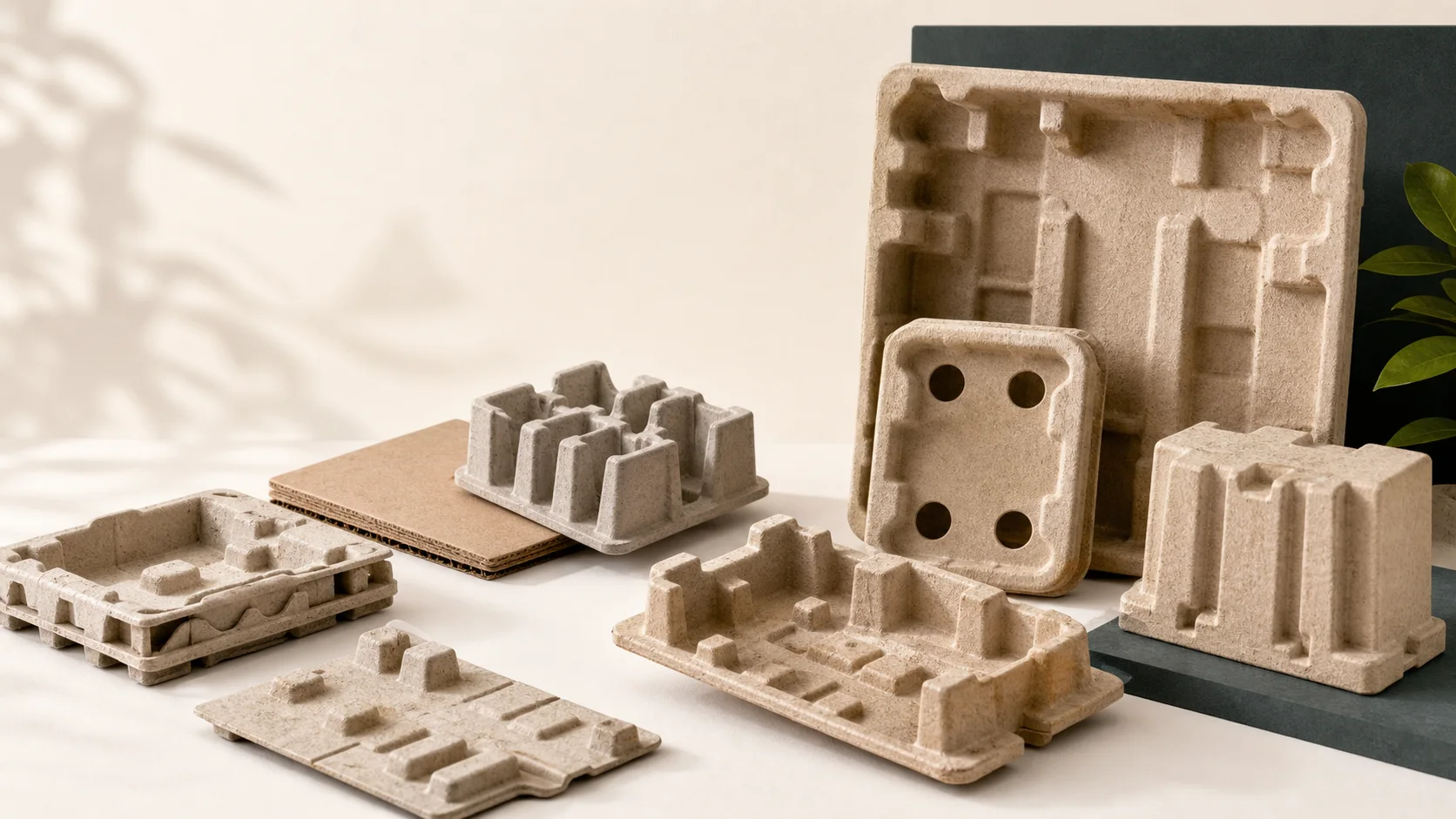
Molded fiber as a formed pulp shape
An educational guide to molded pulp texture, cushioning, product fit, moisture limits, and protective inserts.
What makes molded fiber different
Molded fiber turns pulp into three-dimensional forms. Instead of starting as a flat sheet, it is shaped into trays, inserts, end caps, and cushions that match product geometry.
Its behavior depends on fiber blend, wall thickness, rib design, drying, trimming tolerance, surface finish, and exposure to moisture or oil.
Formed pulp geometry
Material strength comes from shape, ribs, wall thickness, and how cavities support the product.
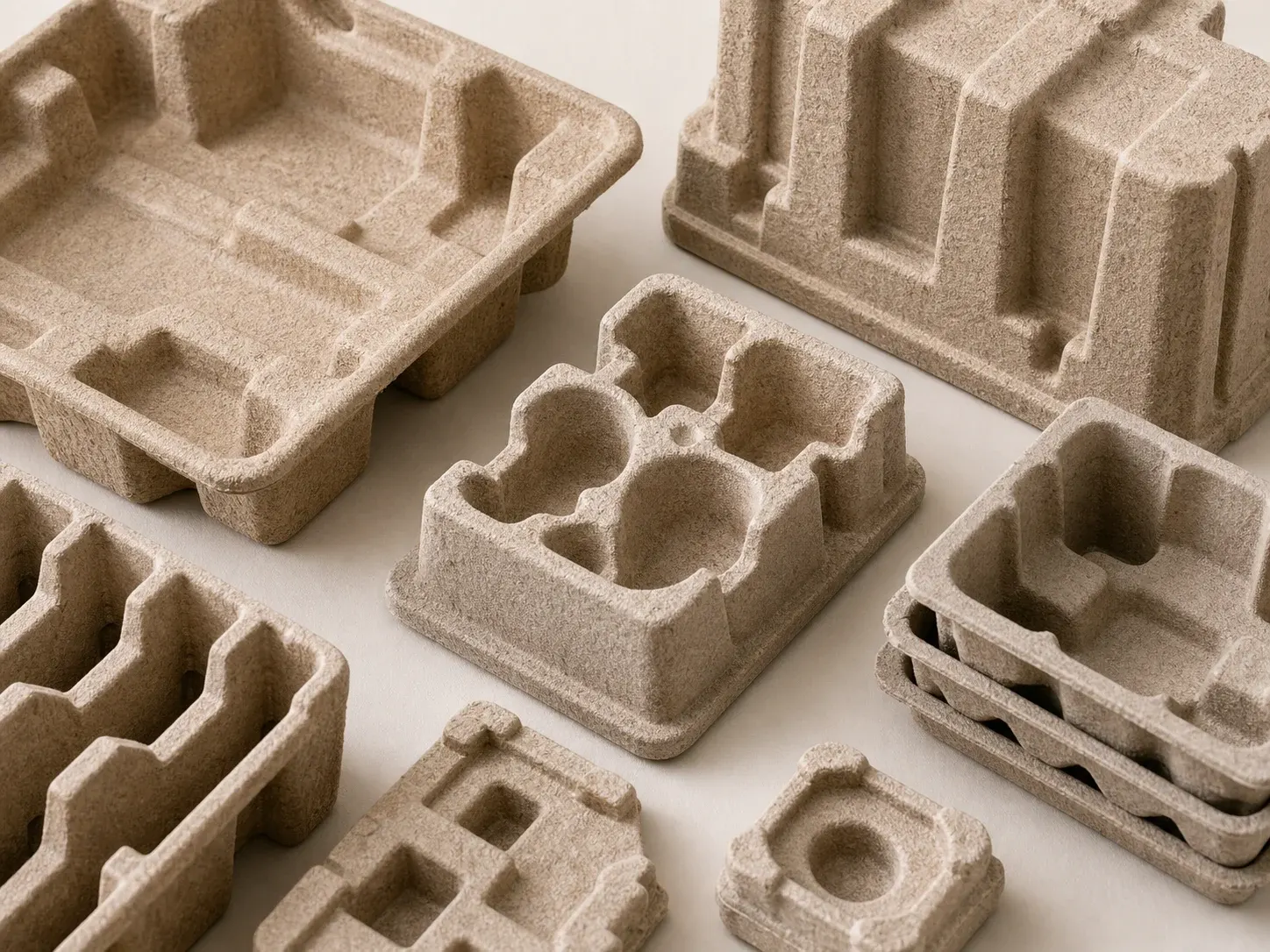
Cushioning ribs and cavities
Molded forms can limit movement, separate parts, and absorb handling stress.
Textured fiber surface
The tactile finish signals recovered fiber, formed pulp, and a lower-gloss material language.
Where molded fiber performs best
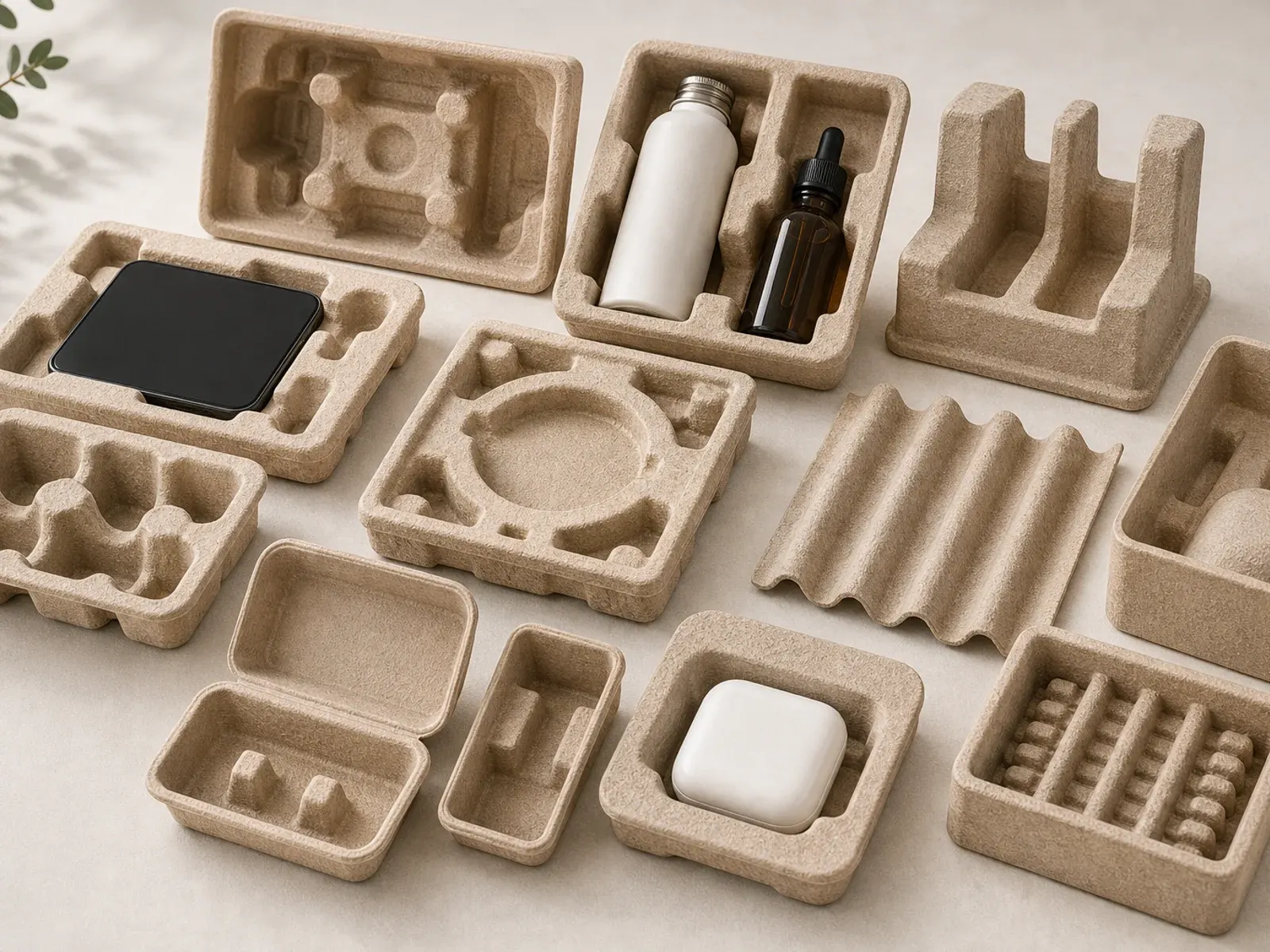
Protective inserts
Keeps fragile or shaped items separated and supported inside outer packaging.
Product trays
Creates a molded presentation surface for sets, kits, and organized components.
End caps and separators
Protects corners, edges, bottles, electronics, and irregular shapes from movement.
Tactile fiber presentation
Adds visible texture when the material itself is part of the packaging message.
How to study the right molded fiber form
Study the shape first, then evaluate compression, moisture, finish, and tolerance.
Map product geometry
Identify support points, fragile areas, movement gaps, and surfaces that need separation.
Check compression behavior
Review wall thickness, rib direction, stacking load, and repeated handling stress.
Review moisture exposure
Plain molded fiber can soften with moisture, so wet or oily use needs extra context.
Compare finish and tolerance
Surface texture, trim accuracy, nesting, and dimensional variation affect final fit.
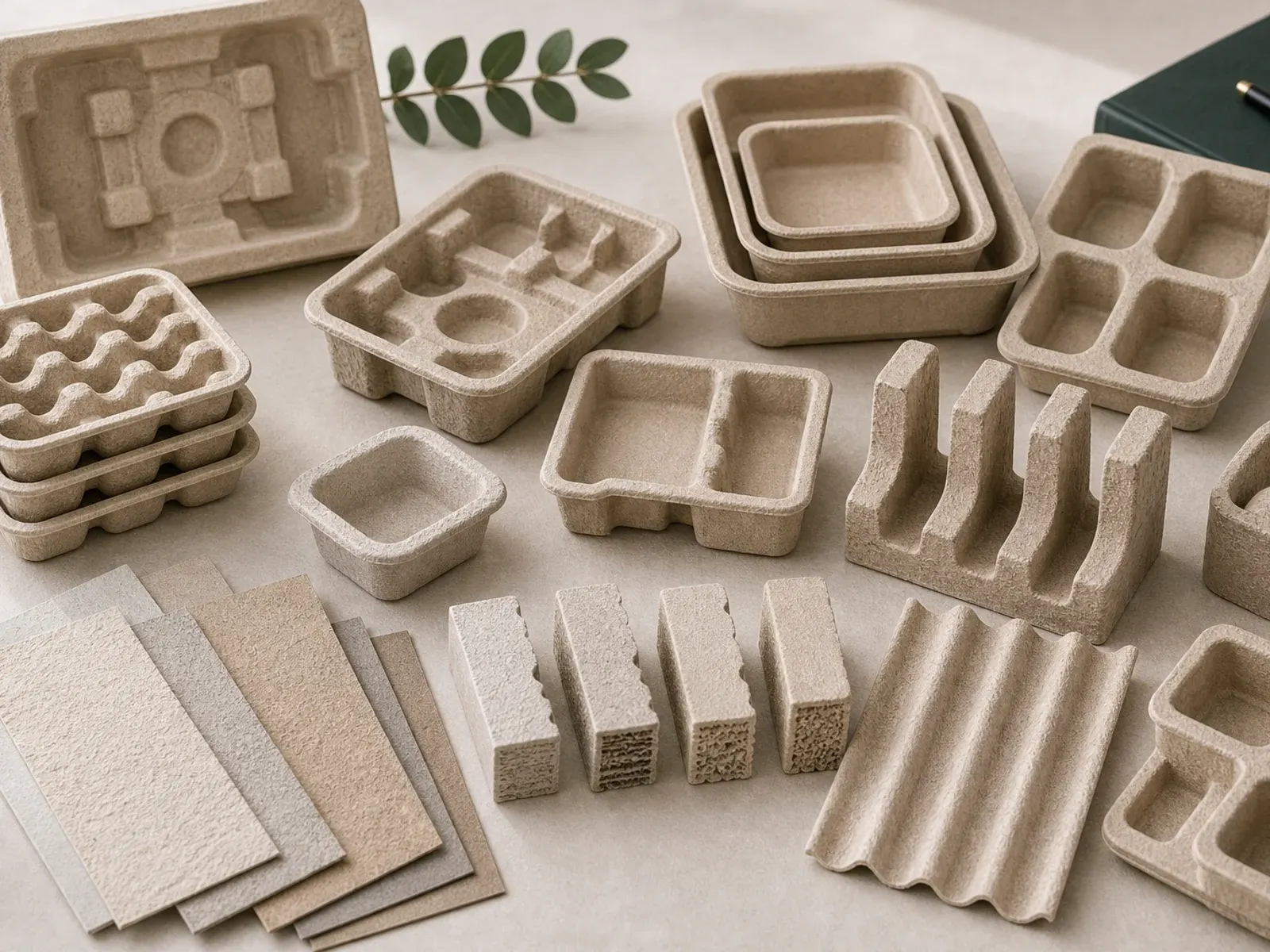
Molded fiber packaging FAQs
Short educational answers for formed pulp packaging and protective inserts.
What is molded fiber made from?
It is commonly made from paper pulp, recovered fiber, or plant fiber blends formed into a shaped part.
Is molded fiber recyclable or compostable?
Recovery depends on fiber composition, coating, residue, local systems, and whether a certified composting route is available.
Can molded fiber handle moisture or oil?
Plain molded fiber has limits. Wet, oily, chilled, or hot use may require coating, treatment, or a different structure.
Why do molded fiber parts vary in texture?
Fiber blend, mold surface, water removal, drying, trimming, and recycled content can all change surface appearance.