
Corrugated fiberboard as a fluted protection system
An educational guide to liners, flutes, stacking strength, cushioning, and delivery handling.

What makes corrugated fiberboard different
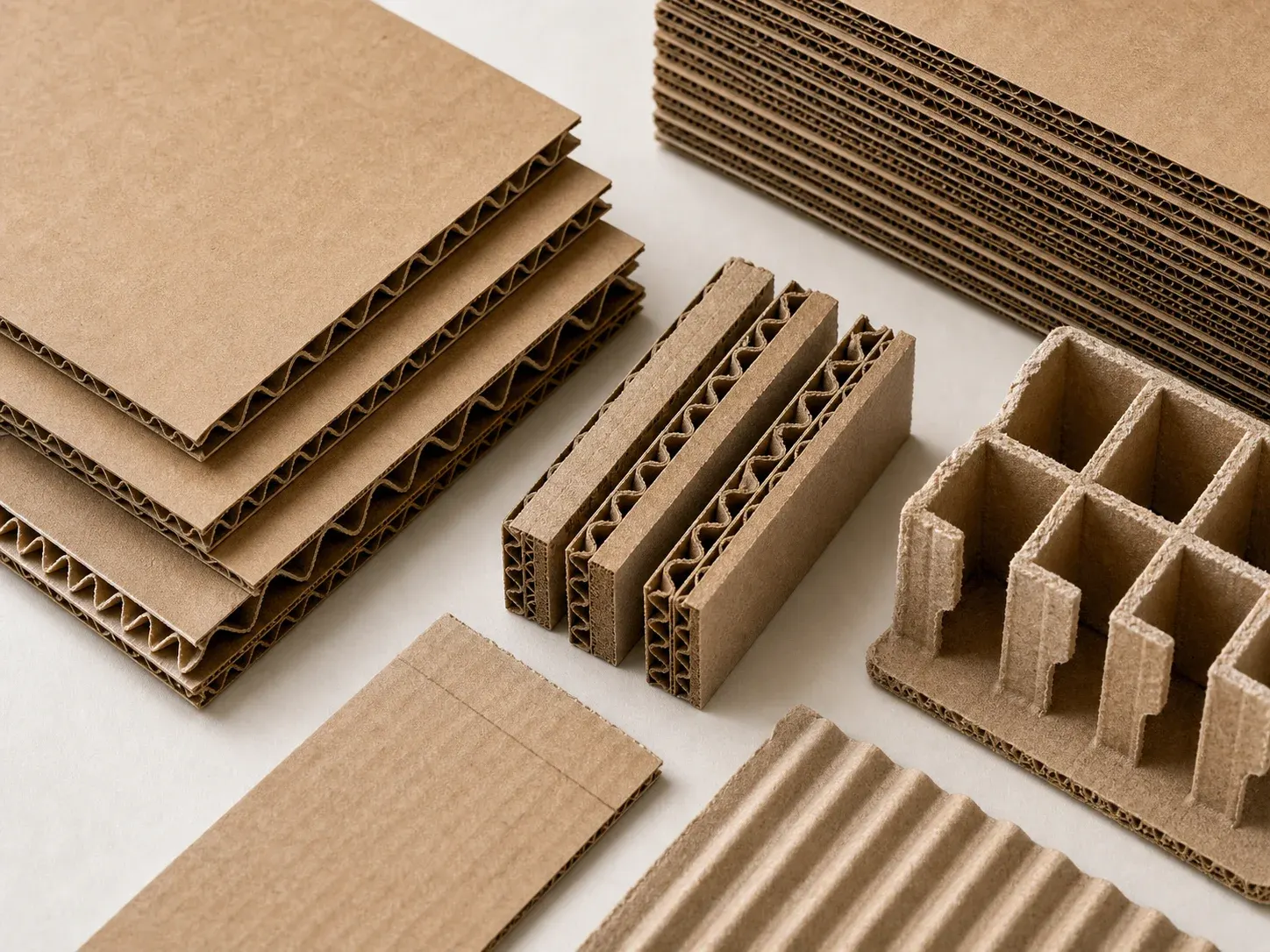
Fluted middle layer
Wave-shaped paper creates distance between liners and helps resist crushing under load.
Stacking and compression
Board grade, box geometry, and humidity determine how cartons hold shape when stacked.
Cushioning structure
Air gaps and flute height help absorb handling stress around products and dividers.
Where corrugated fiberboard performs best
Shipping cartons
Supports product movement through storage, delivery, and repeated handling.
Mailer boxes
Self-locking corrugated forms balance protection, structure, and opening experience.
Protective dividers
Partitions and pads separate products, reduce movement, and add crush resistance.
Bulk and transit handling
Useful where stacking, pallet movement, humidity, and edge strength need close study.

How to study the right corrugated grade
Match product weight
Review item mass, fragility, movement inside the box, and stacking expectations.
Choose flute and liner
Flute height, liner grade, and board combination affect cushioning, print surface, and compression.
Check stacking conditions
Humidity, storage time, pallet layout, and carton orientation change real-world strength.
Review size and cushioning
Box dimensions, void space, inserts, and dividers affect product movement and board stress.

Corrugated fiberboard packaging FAQs
What does flute mean in corrugated board?
Flute describes the wave-shaped middle layer. Its size and profile influence cushioning, thickness, print surface, and compression.
Is corrugated fiberboard recyclable?
Clean corrugated board is widely recovered in many systems, but coatings, residue, wet strength treatment, or mixed materials can change outcomes.
How does humidity affect corrugated packaging?
Moisture can soften fiber, reduce compression strength, and change stacking performance during storage and delivery.
When is corrugated better than paperboard?
Corrugated is usually studied when shipping protection, stacking, cushioning, or heavier handling stress matters more than thin retail presentation.
Related guides
Reading internal vs external box dimensions: will your product fit?
Read the guideUnderstanding corrugated flute types: what the letters reveal about box construction
Read the guideHow To Read Packaging Recycling Symbols In Malaysia: Codes 1–7 And Other Marks
Read the guide