
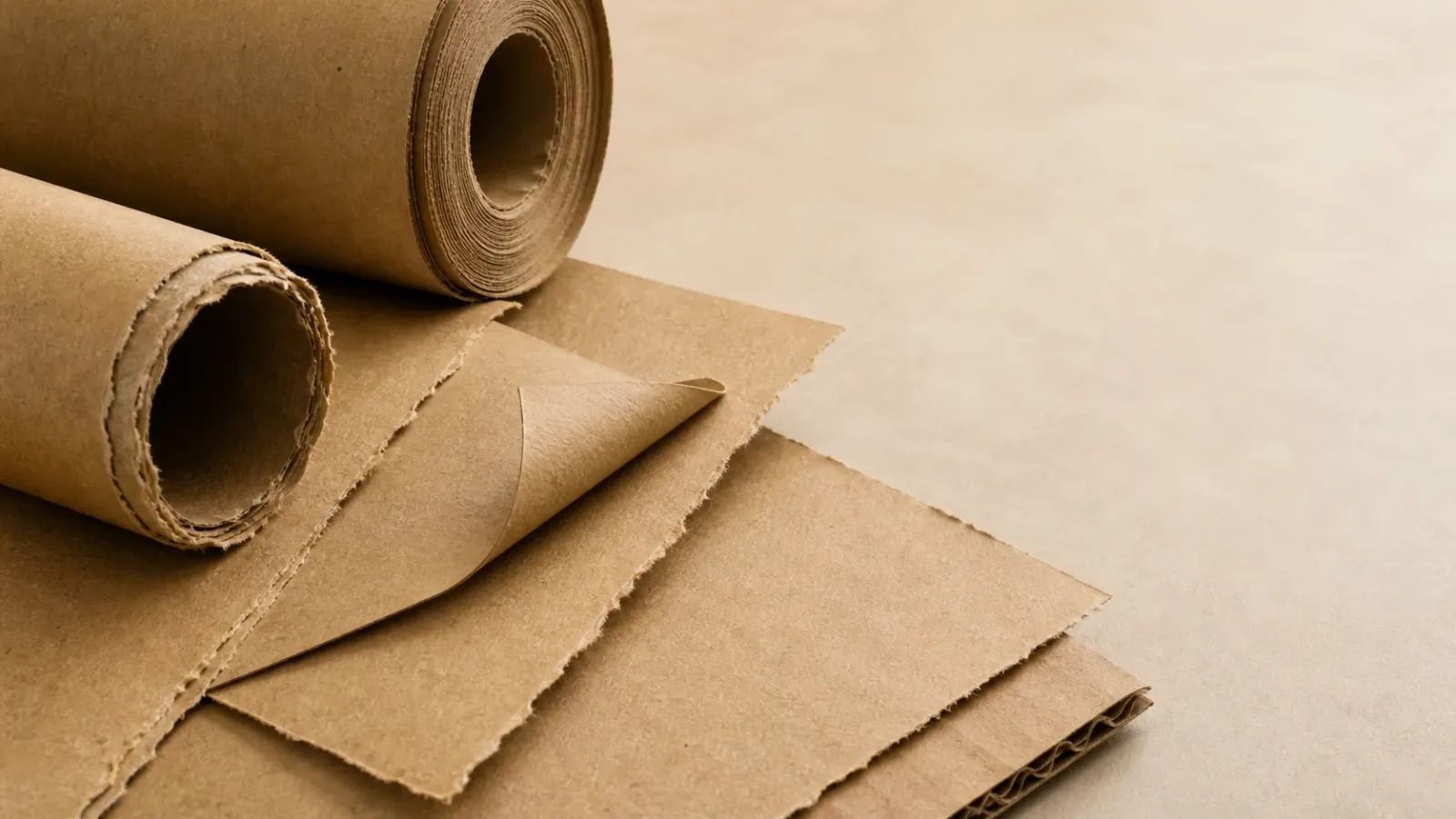
Kraft paper as a material system
An educational guide to kraft texture, fiber strength, coatings, folding behavior, and common packaging formats.
What makes kraft paper different
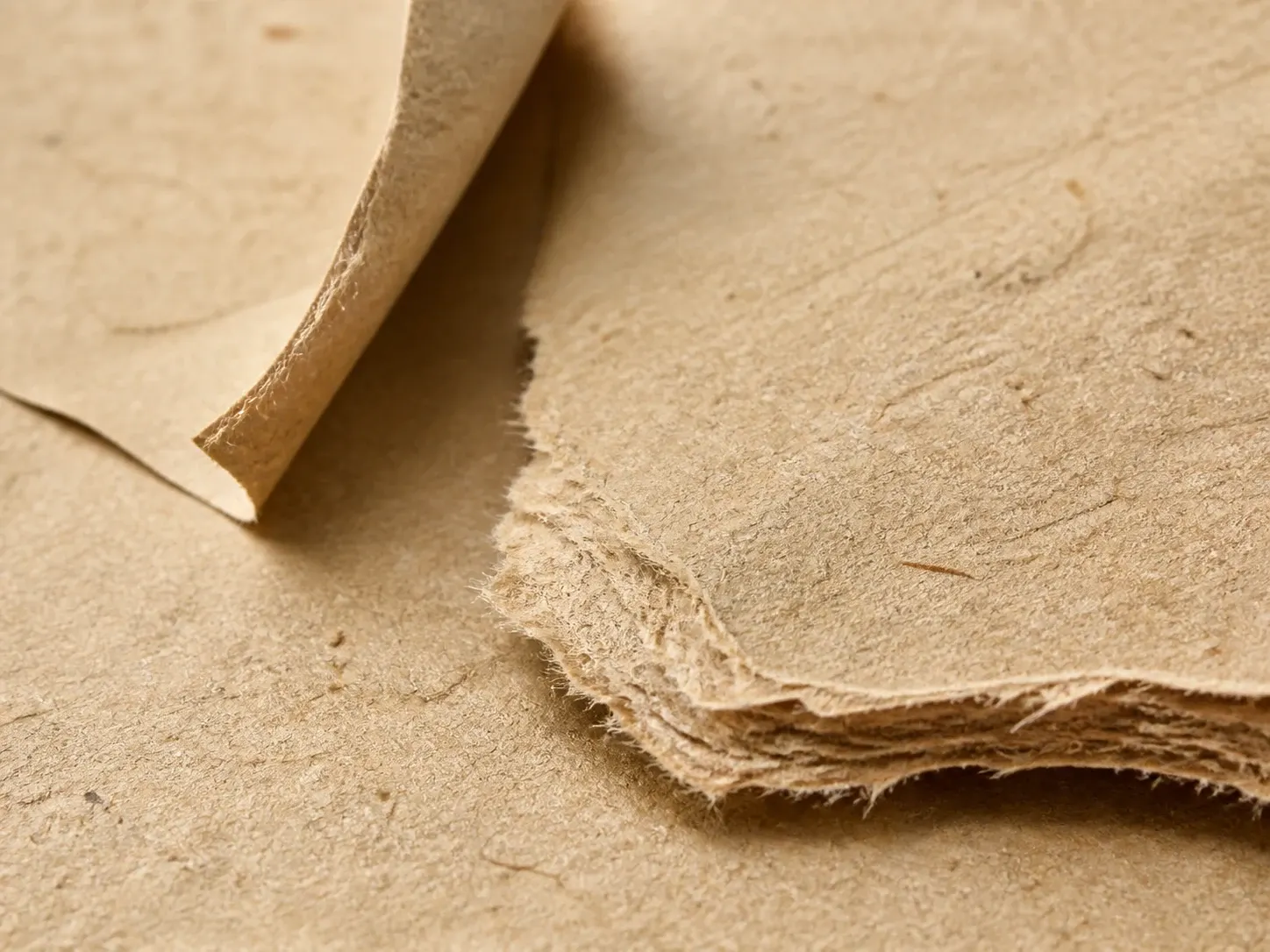
Kraft paper is valued because it combines a natural unbleached look with a tough, fibrous feel. The matte surface, visible fiber direction, and earthy color make it useful for packaging that wants a tactile material story.
Its behavior depends on fiber source, pulping, refining, GSM, coating, converting method, and the environment where the package is handled.
Natural surface
The brown tone and matte feel come from less bleached fiber and create a warm editorial packaging look.
Fiber strength
Kraft is associated with strong fiber bonding, but final strength still depends on grade, weight, and converting method.
Grade-dependent behavior
A wrap, bag, sleeve, liner, or board-backed structure can all use kraft differently.
Where kraft paper performs best
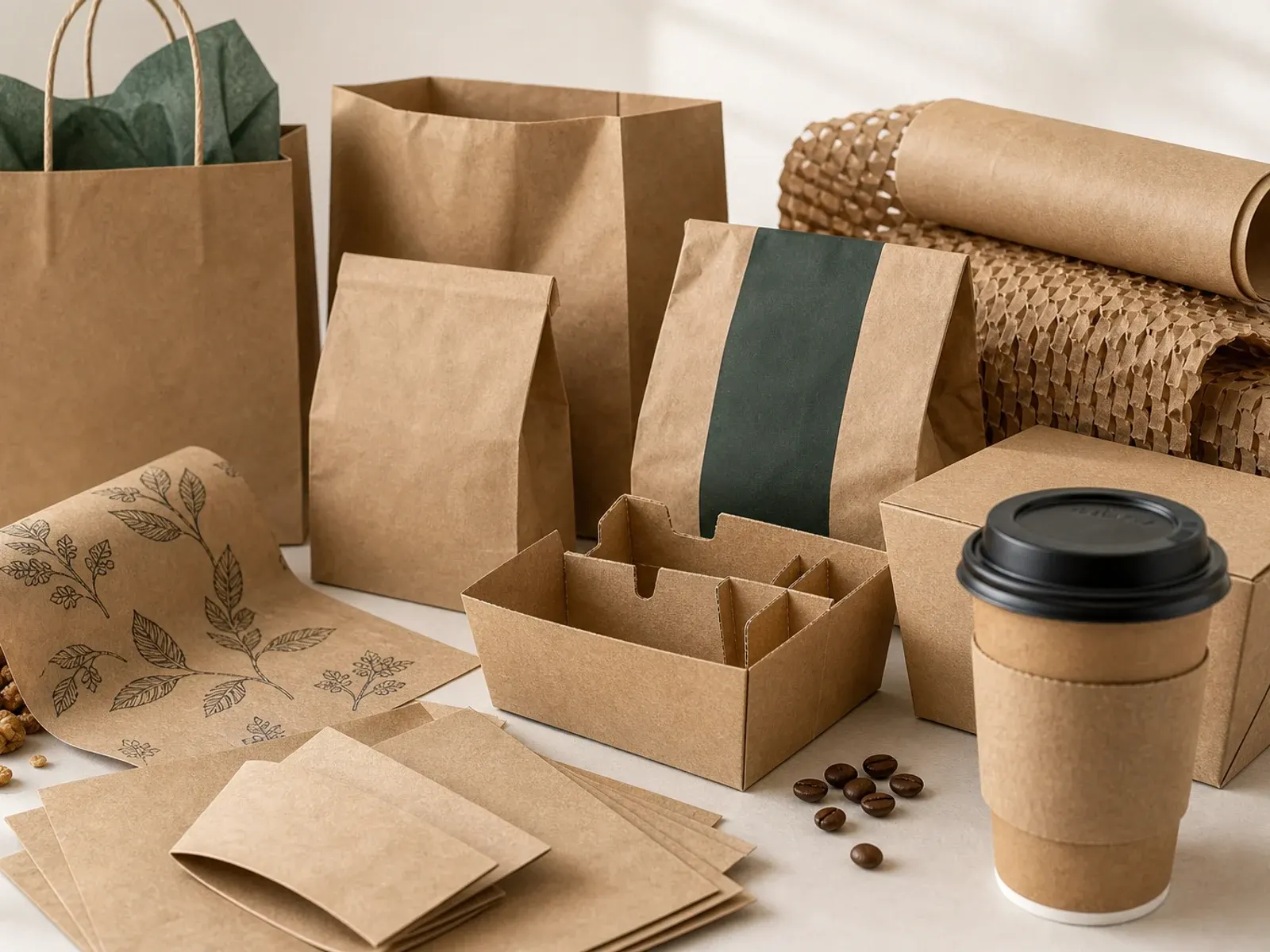
Wraps and sleeves
Useful for dry goods, outer wraps, belly bands, and simple protective layers.
Bags and pouches
Works for lightweight dry products when structure, closure, and barrier needs are matched carefully.
Liners and inserts
Adds surface separation, texture, or cushioning inside a larger packaging structure.
Printed natural packaging
The darker surface changes ink contrast, color accuracy, and artwork planning.
How to study the right kraft grade
Start from the handling condition, then compare material behavior against the product environment.
Define the use context
Separate dry retail display, food-adjacent use, direct food-contact use, chilled handling, and shipment protection.
Compare GSM and stiffness
Heavier paper can feel stronger, but fold behavior, fiber direction, and converting method matter too.
Check barrier needs
Untreated kraft is not automatically moisture or grease resistant. Coating or a different structure may be needed.
Study print contrast
Natural brown paper changes color appearance, fine-line contrast, and finish expectations.
Kraft paper packaging FAQs
Short educational answers for comparing kraft with other paper packaging materials.
Is kraft paper recyclable?
Many kraft paper formats are recyclable when clean and accepted locally. Coating, foil, laminate, residue, or mixed construction can change recovery options.
Is kraft paper stronger than white paper?
Strength depends on fiber source, pulping, refining, GSM, and converting. Unbleached kraft often has a tougher natural feel, but grade matters more than color alone.
Can kraft paper touch food?
Only use grades that match the required food-contact condition for the application and market. Natural appearance alone does not prove suitability.
Does kraft paper resist moisture or oil?
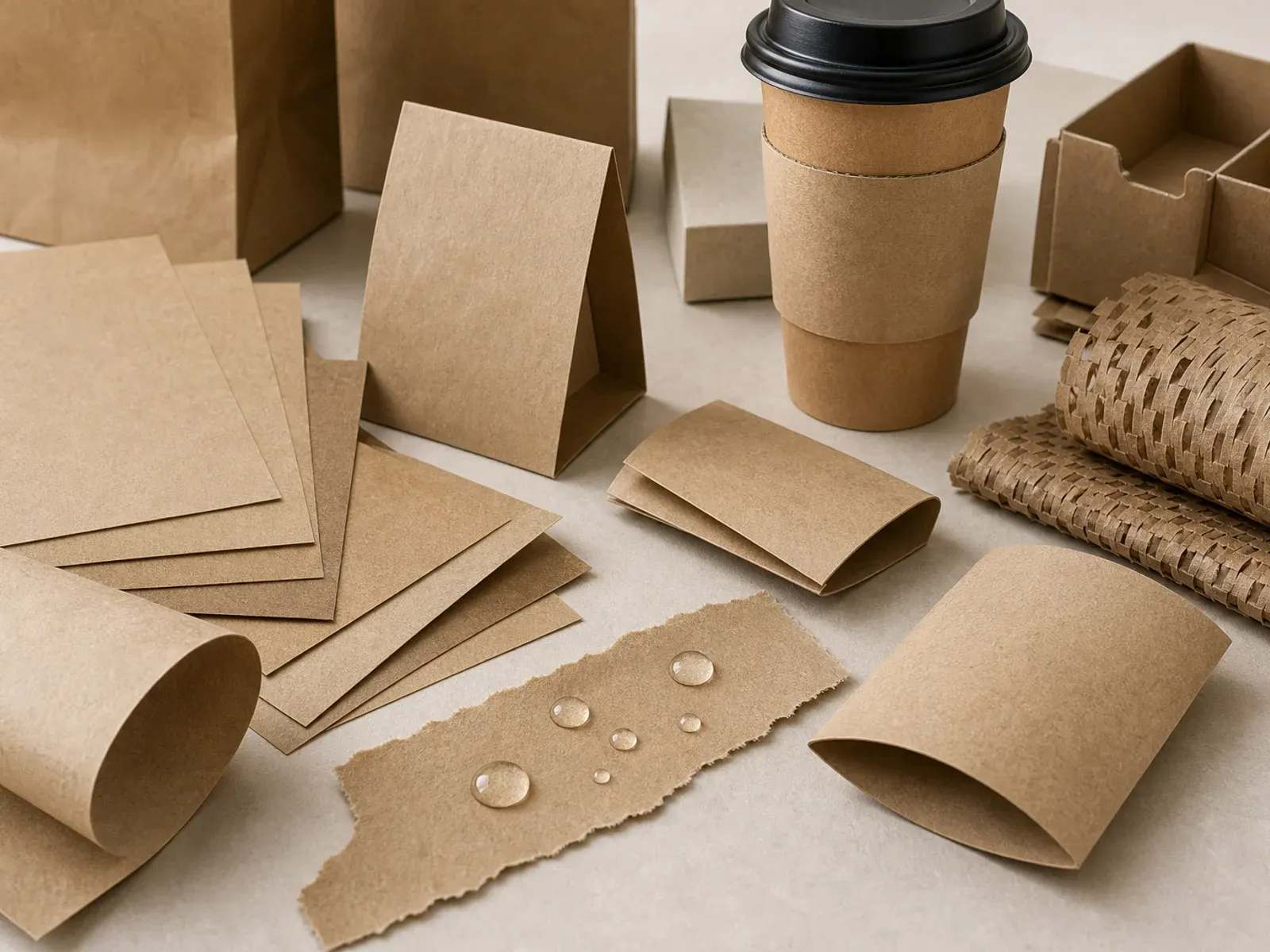
Plain kraft has limited barrier behavior. Moisture, oil, and chilled logistics usually require coating, lamination, waxed paper, grease-resistant paper, or another structure.