
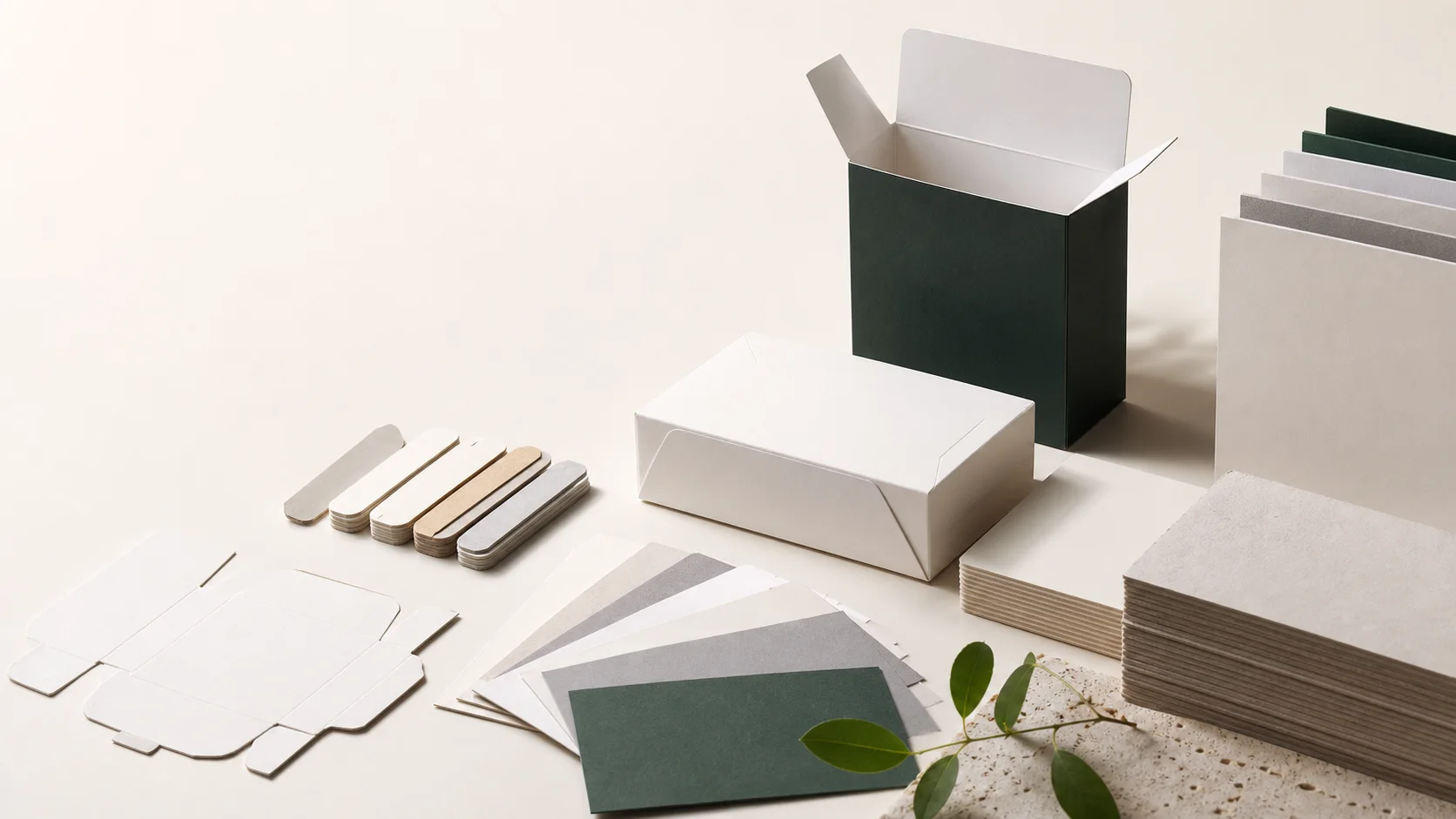
Paperboard as the printable carton material
An educational guide to paperboard surface, stiffness, fold behavior, coatings, and retail packaging uses.
What makes paperboard different
Paperboard is a thicker paper-based material valued for stiffness, print surface, and controlled folding. It is common in cartons, sleeves, cards, and display panels where shape and visual finish matter.
Its behavior depends on caliper, fiber construction, grain direction, coating, scoring, humidity, and the way panels are folded during converting.
Printable surface
A smoother face supports color areas, small typography, and clean graphic edges better than rough fiber materials.
Caliper and stiffness
Sheet thickness and board construction shape how a carton stands, folds, and feels in hand.
Scored fold behavior
Creasing, grain direction, and coating choice can reduce cracking and improve panel alignment.
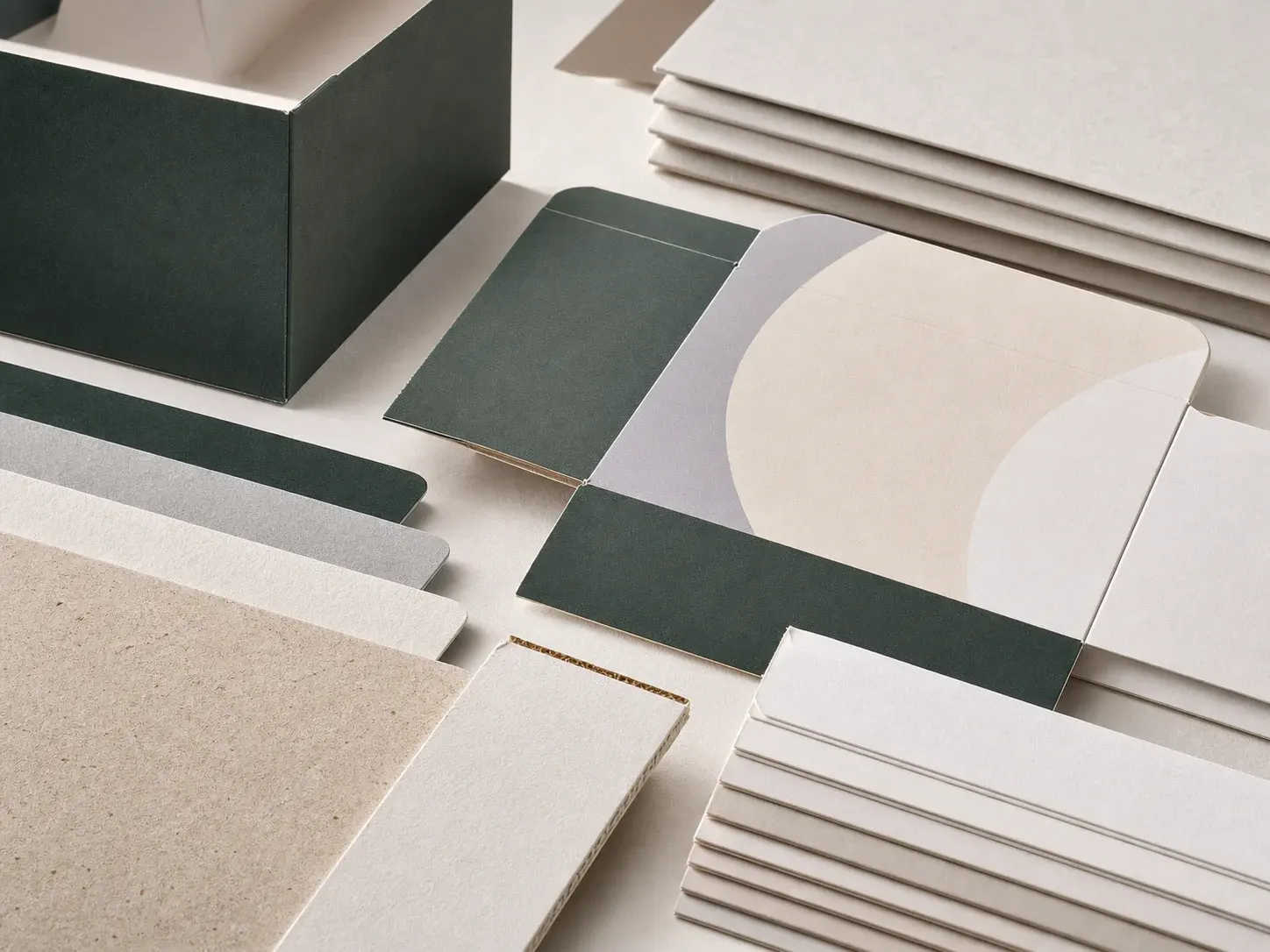
Where paperboard performs best
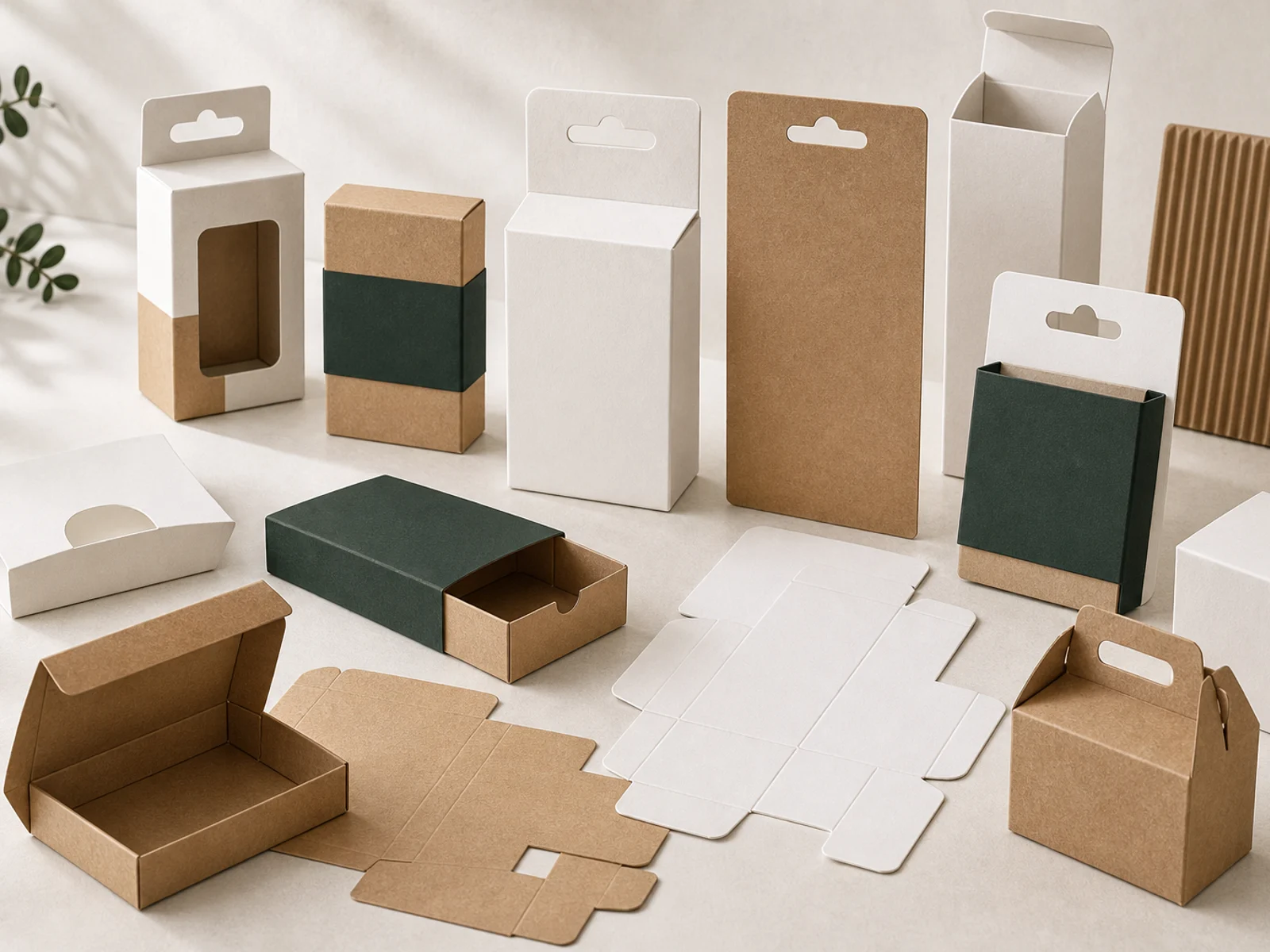
Folding cartons
Useful for light retail formats that need panels, closures, and compact storage before assembly.
Sleeves and belly bands
Adds printable structure around trays, jars, boxes, and product bundles.
Header cards and inserts
Works for hanging cards, backing cards, instruction panels, and organized inserts.
Printed retail panels
A reliable base for typography, color blocks, finish contrast, and visual hierarchy.
How to study the right paperboard grade
Start with the display role, then compare board construction, fold quality, and surface finish.
Define the display role
Separate shelf-facing panels, sleeves, backing cards, inserts, and protective cartons.
Compare board construction
Review caliper, fiber makeup, stiffness, opacity, and surface treatment together.
Test crease quality
Fold samples along grain and across grain to check cracking, springback, and panel alignment.
Review print and coating
Surface treatment changes ink holdout, rub resistance, gloss, and recycling context.
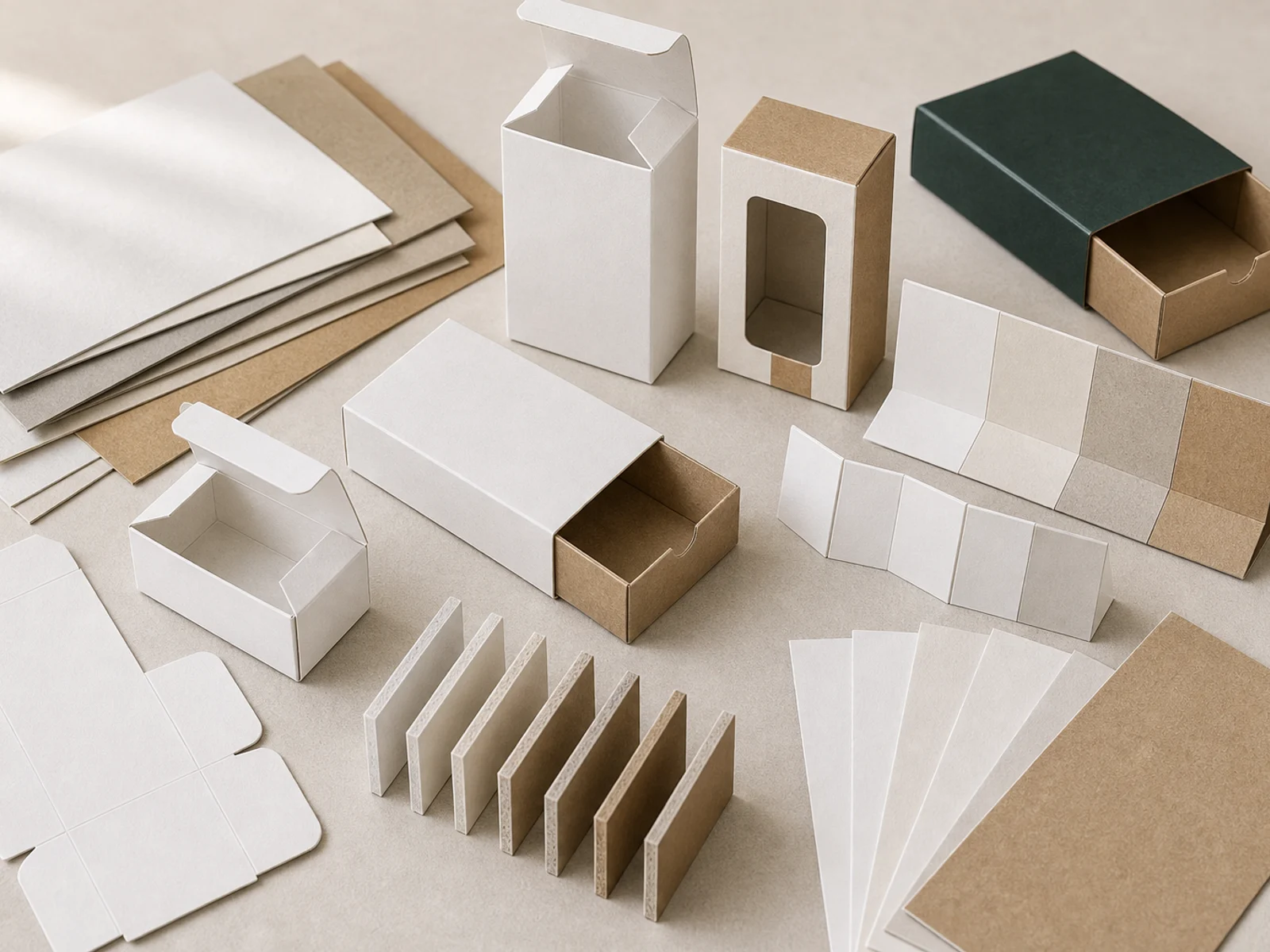
Paperboard packaging FAQs
Short educational answers for comparing paperboard with other packaging materials.
Is paperboard the same as cardboard?
Cardboard is a broad casual term. Paperboard usually refers to thicker paper-based board used for cartons, cards, sleeves, and printed panels.
Why can paperboard crack on folds?
Cracking can come from coating, grain direction, dry conditions, heavy ink coverage, or an unsuitable crease.
Can paperboard be used for food packaging?
Food-use suitability depends on the grade, coating, ink, adhesive, and whether the package has direct or indirect food-contact conditions.
Is coated paperboard recyclable?
Some coated formats can enter recovery streams, while plastic film, foil, heavy residue, or mixed layers can change sorting outcomes.