
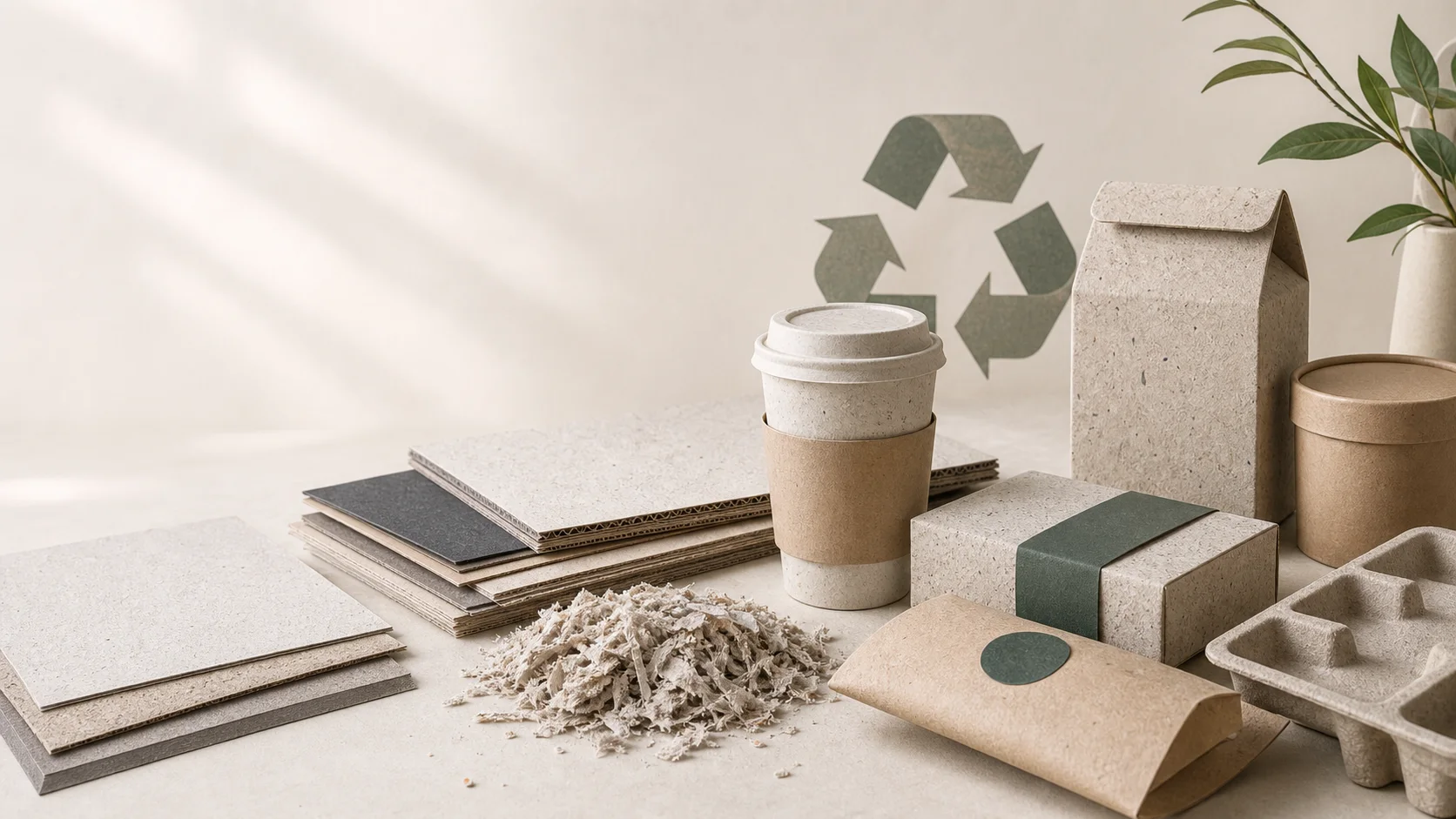
Recycled paper as a recovered fiber material
An educational guide to recovered fiber content, visible texture, strength trade-offs, print behavior, and disposal claims.
What makes recycled paper different
Recycled paper uses recovered fiber, which can create visible specks, muted color, and a tactile surface. It is often studied for material circularity, texture, and reduced reliance on virgin fiber.
Its behavior depends on recycled content level, fiber quality, deinking, blending, sheet formation, coating, strength needs, and the next recovery route.
Recovered fiber source
Fiber history and processing affect cleanliness, color, strength, and visible texture.
Visible texture variation
Specks, tone variation, and a less uniform surface can become part of the material character.
Strength depends on grade
Recovered fiber content alone does not define stiffness, tear resistance, or folding behavior.
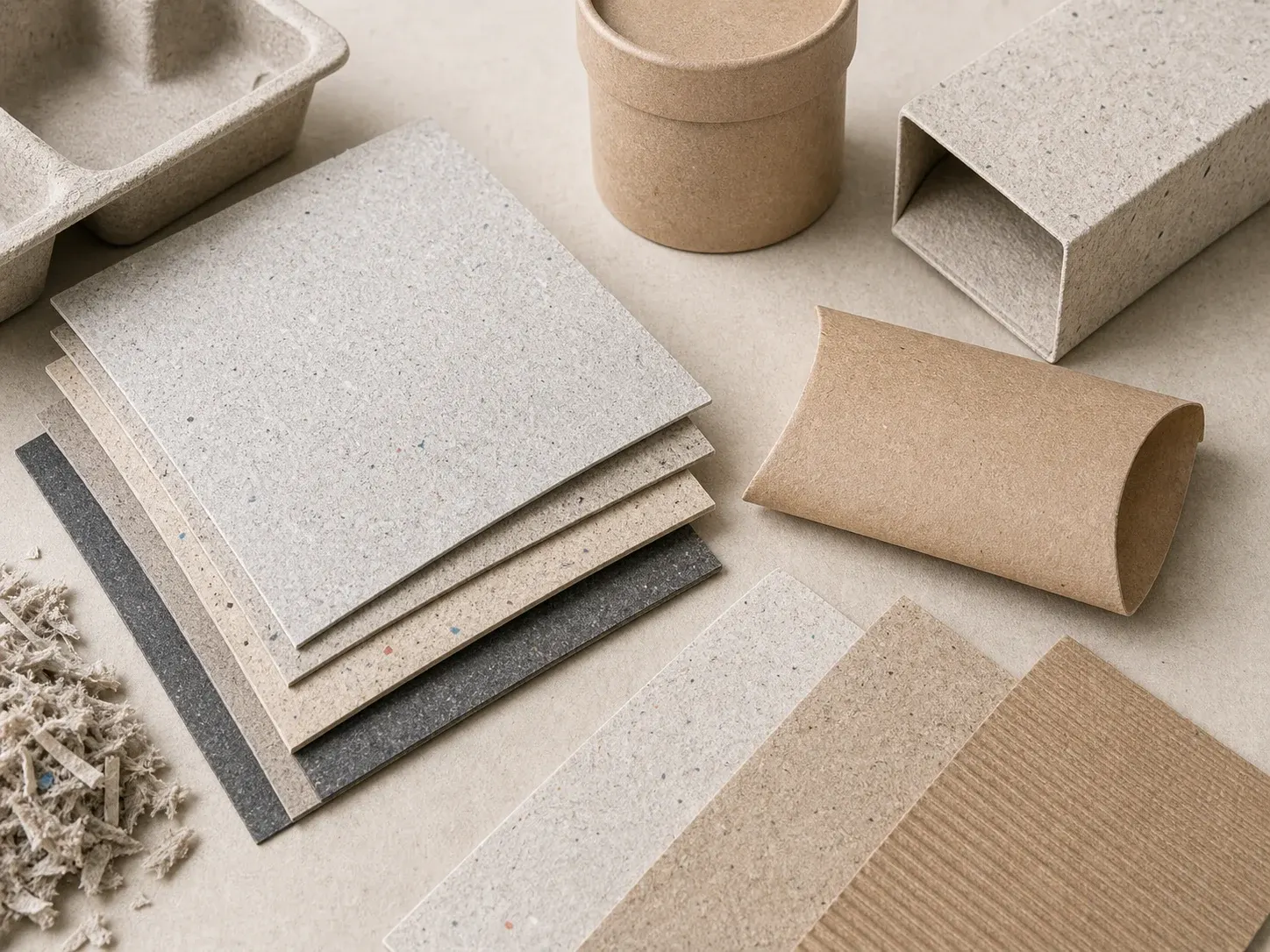
Where recycled paper performs best
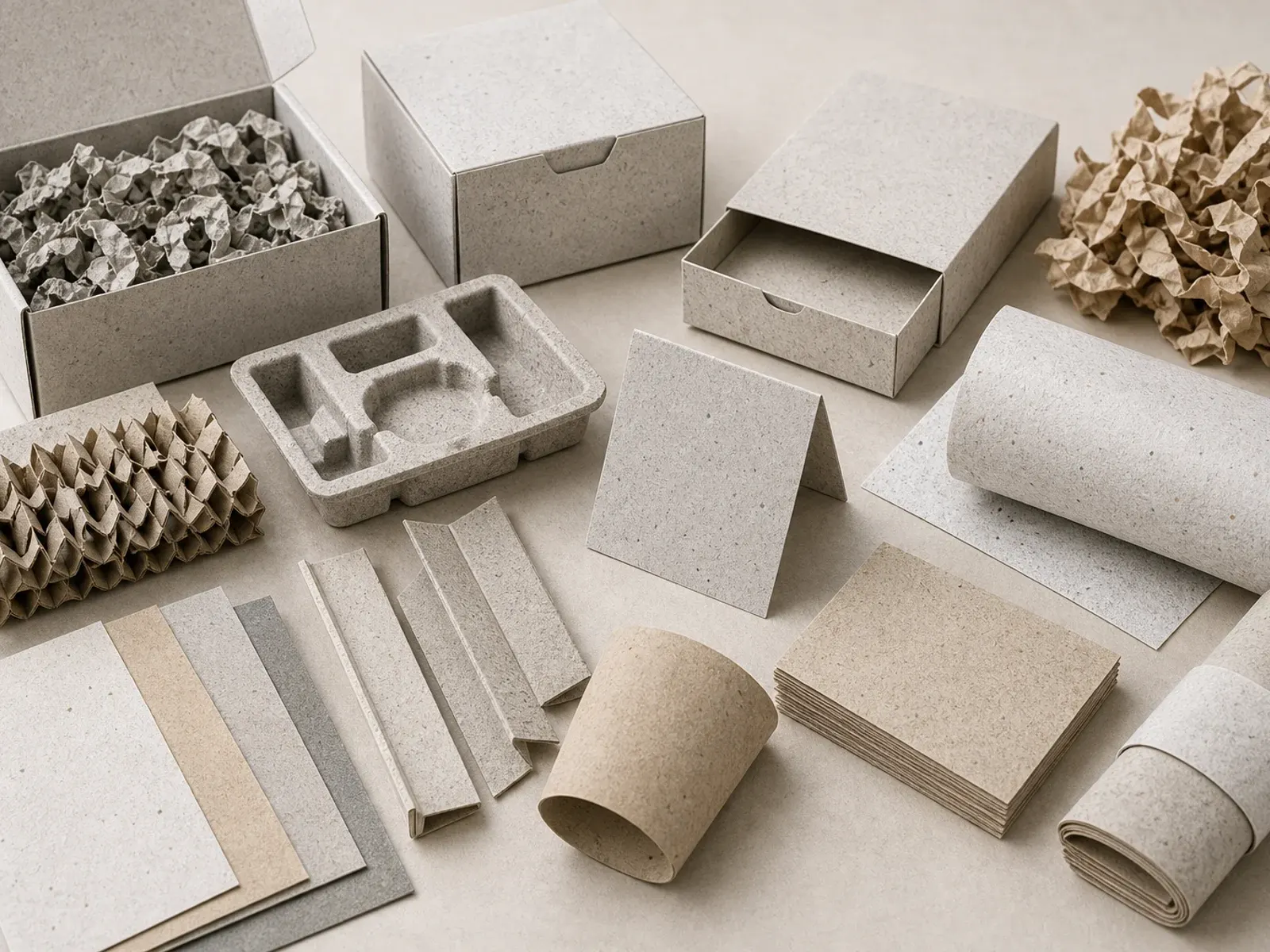
Inserts and void fill
Works for simple separation, cushioning, wrapping, and uncoated protective layers.
Retail cards and wraps
Adds a tactile, matte surface for cards, belly bands, wraps, and backing panels.
Outer cartons and sleeves
Can support light structures when grade, stiffness, and fold behavior match the use case.
Circular material storytelling
Visible fiber and recovered-content language can help explain material origin and recovery.
How to study recycled paper quality
Compare recycled content with strength, surface, coating, and recovery context rather than treating it as one fixed grade.
Verify recycled content
Separate pre-consumer and post-consumer content when the distinction is available.
Compare fiber strength
Review stiffness, tear behavior, folding, and surface integrity for the package format.
Inspect surface and color
Specks, tone, opacity, smoothness, and ink behavior can vary between grades.
Check coating and recovery
Coating, adhesive, ink coverage, and residue can affect the next recovery path.
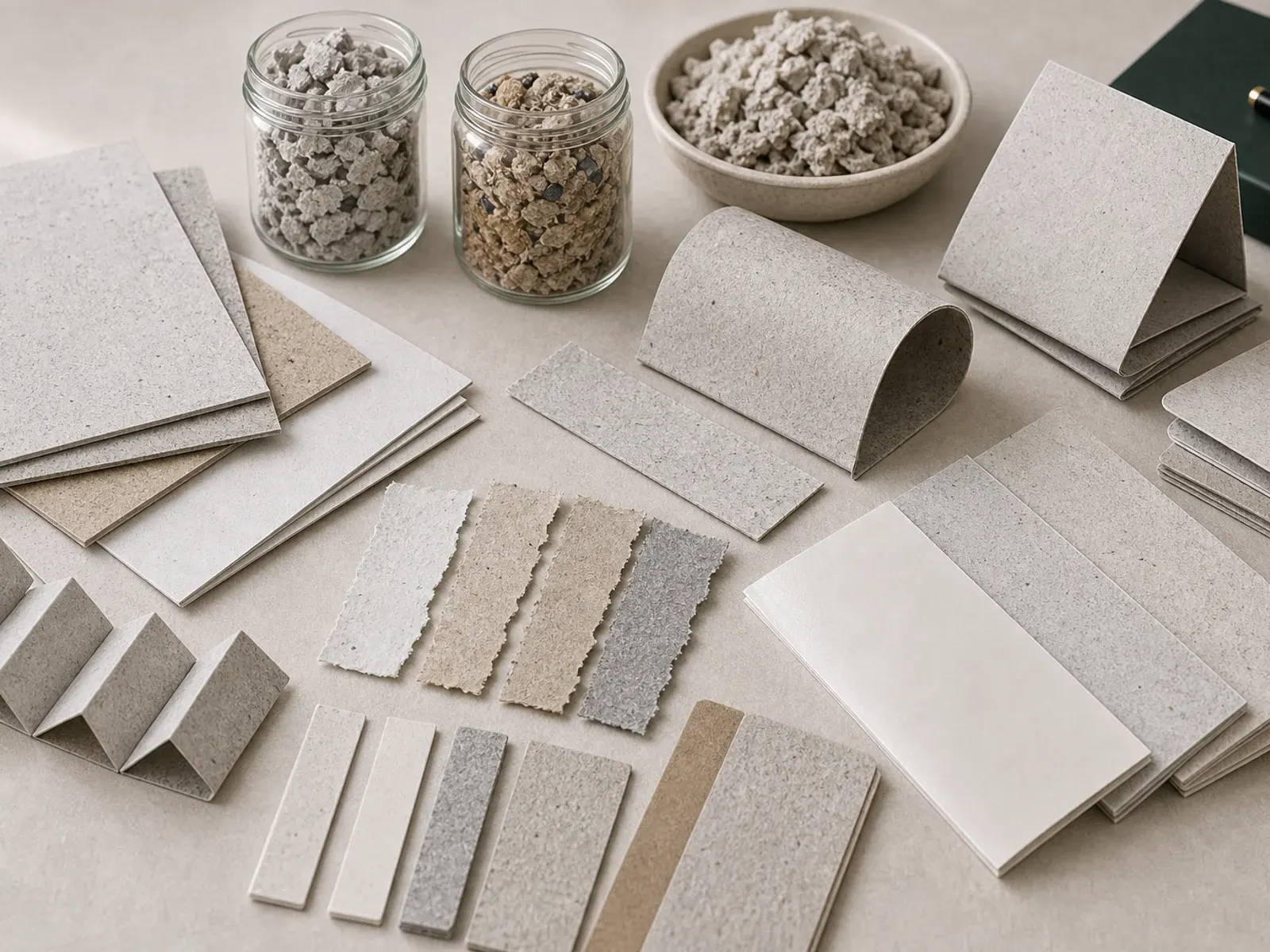
Recycled paper packaging FAQs
Short educational answers for recovered fiber, texture, strength, and recycling claims.
Is recycled paper always recyclable again?
Not always. Fiber quality, coating, residue, mixed construction, and local sorting rules can affect another recovery cycle.
Does recycled paper look different?
It often has muted tone, fiber specks, or texture variation, but appearance depends on grade and processing.
Is recycled paper weaker than virgin paper?
Recovered fibers can be shorter after processing, but final strength depends on blend, refining, additives, and board construction.
Can recycled paper be used for food packaging?
Food-use suitability depends on the grade, cleanliness controls, coating, and direct or indirect food-contact condition.