Eco Pack Friend Editorial Team
How To Choose Product Packaging: A Requirements-First Guide To Protection, Materials, Testing, And Cost
A package can look perfect on a sample table and still fail in a humid warehouse, a courier van, or the customer’s hands. If you are a product owner, packaging buyer, manufacturer, or operations manager, this guide explains how to choose product packaging by turning product risks and commercial needs into measurable criteria.
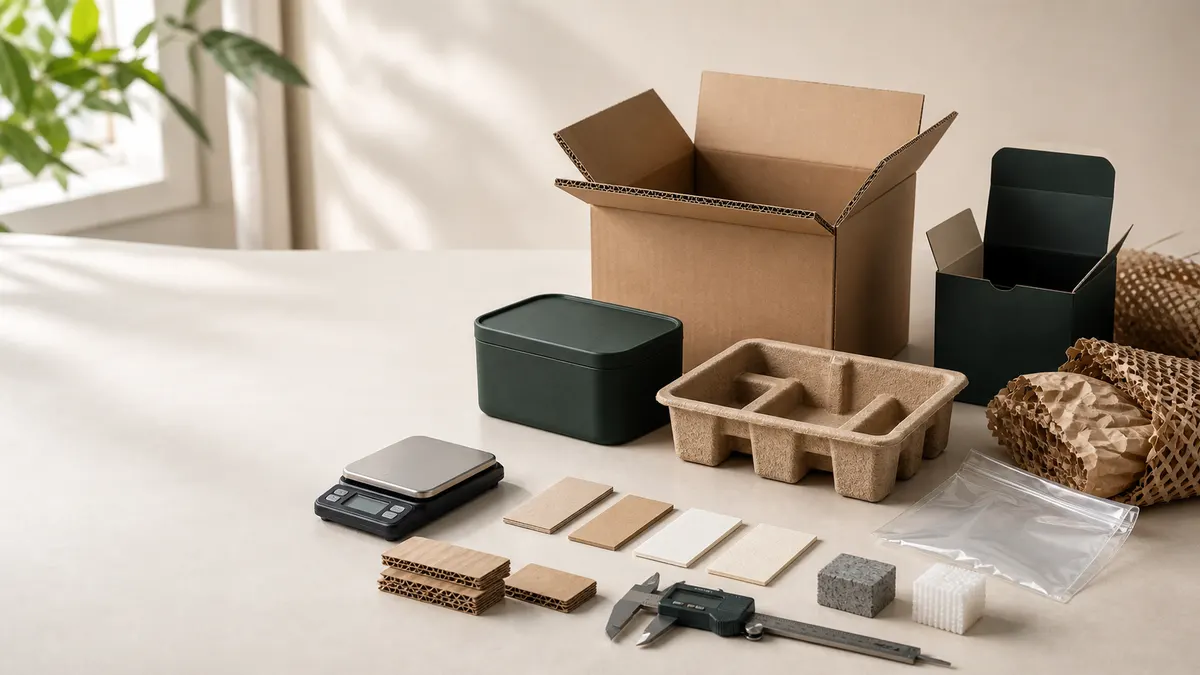
A package can look perfect on a sample table and still fail in a humid warehouse, a courier van, or the customer’s hands. If you are a product owner, packaging buyer, manufacturer, or operations manager, this guide explains how to choose product packaging by turning product risks and commercial needs into measurable criteria.
Key takeaway: Start with what the packaged product must prevent, preserve, contain, communicate, and survive. Then compare complete packaging systems against those requirements, using representative products and distribution conditions to validate the result.
The most important shift is simple: do not begin by choosing paper, plastic, glass, or metal. Begin by defining failure. A material preference may guide the search, but it cannot replace evidence that the product will remain safe, usable, presentable, and recoverable throughout its intended life.
Quick Answer: Choose Product Packaging In Five Steps
Use this requirements-first sequence to narrow the options before comparing materials or requesting production quotes:
- Define the product risks. Identify what could leak, break, spoil, react, contaminate, deform, or become difficult to use.
- Map the full journey. Record filling, storage, climate, transport, retail, opening, repeated use, returns, and disposal conditions.
- Set measurable requirements. Specify acceptable barrier, seal, strength, shelf-life, usability, presentation, cost, and recovery performance.
- Compare complete packaging systems. Evaluate primary, secondary, and tertiary components together rather than judging one visible material in isolation.
- Validate before scaling. Test representative packaged products under realistic ageing, handling, distribution, and user conditions.
The rest of this guide explains each step, including barrier selection, fragile-product protection, containment, food-contact considerations, logistics costs, sustainability claims, and validation planning.
Start With The Product, Not A Preferred Material
The most reliable way to learn how to choose product packaging is to ask practical questions before discussing formats. What can damage the product? What can the product damage? Which conditions will it encounter, and what level of change or damage is acceptable?
Product packaging requirements are the measurable conditions a packaging system must satisfy from filling and storage through transport, use, and disposal. They can include leakage limits, barrier values, compression strength, opening force, coding space, thermal duration, or compatibility with a specified recovery stream.
Keep preference statements separate from performance criteria. “Use less plastic” is a direction. “Reduce virgin plastic by 20% without increasing leakage, spoilage, dimensional weight, or sorting incompatibility” is a criterion that can be evaluated.
Packaging should also be considered at three connected levels:
- Primary packaging directly contains the product or comes into contact with it, such as a bottle, pouch, jar, liner, or sachet.
- Secondary packaging groups or protects primary packs, such as a printed carton, divider set, tray, or multipack.
- Tertiary packaging supports storage and distribution, such as shipping cases, pallets, stretch wrap, straps, and protective transport components.
One component does not have to perform every function. A moisture-resistant inner pouch may preserve a snack, while a paperboard carton provides crushing resistance, printable space, retail presentation, and easier handling.
Choose a packaging system by the failures it prevents, not by the reputation of its most visible material.
Build A Product Risk Profile Before Comparing Formats
A useful packaging brief describes both the product and the conditions surrounding it. Record known facts, identify uncertainties, and avoid treating a laboratory sample as representative of future production.
| Risk area | Questions to answer | Possible packaging control |
|---|---|---|
| Physical state | Is the product a solid, powder, granule, paste, liquid, pressurised item, or set of mixed components? | Container geometry, sift-resistant seal, liquid-tight closure, pressure allowance, or component separation |
| Fragility | Can it break, scratch, dent, crush, vibrate loose, or abrade nearby surfaces? | Cushioning, immobilisation, dividers, clearance, bracing, or rigid outer protection |
| Chemical sensitivity | Does oxygen, moisture, light, odour, or contact with another material change the product? | Barrier layer, opaque pack, compatible coating, hermetic closure, or controlled headspace |
| Biological sensitivity | Could contamination, pests, or microbial growth make it unsafe or unusable? | Hygienic filling, seal integrity, tamper evidence, and controlled storage |
| Product aggressiveness | Could oils, acids, solvents, aromas, heat, pressure, or sharp edges weaken the package? | Compatibility testing, resistant liner, puncture protection, or reinforced structure |
| Use pattern | How is it opened, dispensed, resealed, stored, and handled after opening? | Opening feature, measured dispensing, resealable closure, instructions, or accessible design |
| Commercial impact | What shelf life, appearance, damage rate, and replacement cost are acceptable? | Defined acceptance limits and an appropriate validation plan |
For each hazard, document the consequence, exposure condition, severity, likelihood, proposed packaging control, and validation method. This separates high-consequence risks, such as contamination or leakage, from cosmetic preferences that can be resolved later.
Product value matters too. A low-cost but fragile component may justify substantial protection if a failure stops an installation, creates a safety concern, or causes an expensive return.
Turn Shelf-Life Risks Into Packaging Barrier Requirements
Packaging barrier requirements should express limits on transmission or exposure. Asking for a “high-barrier film” is incomplete because the required performance depends on the product, package area, seal, closure, storage conditions, and target shelf life.
Moisture can soften a crisp product, cause a powder to cake, or alter a sensitive component. Oxygen can affect flavour, colour, nutrients, corrosion, and product function. Light, temperature, odours, and water activity may also influence deterioration, sometimes through interacting rather than independent effects.
Useful shelf life packaging requirements include:
- Expected unopened and opened life
- Permitted temperature and relative-humidity range
- Maximum oxygen or water-vapour transmission
- Permitted light exposure
- Number and frequency of openings
- Acceptable product condition at the end of the stated life
- Seal-integrity and closure-performance limits
Warm, humid conditions are relevant to many Malaysian and Southeast Asian supply chains, but climate should not be reduced to a regional assumption. Conditions can differ between a cooled factory, an unconditioned warehouse, a retail shelf, a parcel vehicle, a home kitchen, and an export container. Measure them where possible or define justified worst-case profiles.
An intact hermetic package prevents atmospheric oxygen pickup and moisture gain or loss. That benefit depends on the complete pack achieving and retaining a hermetic condition; a strong barrier wall cannot compensate for a leaking seam, damaged closure, pinhole, or poorly controlled seal.
Films, papers, foils, coatings, and laminates behave differently in water-vapour transmission, oxygen permeability, light transmission, burst strength, pinhole resistance, and sensitivity to folds or creases. Multilayer structures can combine complementary properties, although the same combination may complicate separation and recycling.
Worked Example: A Hygroscopic Snack
Consider a crisp dried snack sold through Malaysian retail stores and parcel channels. Its primary pack may need an airtight, moisture-resistant seal to control texture loss. A secondary carton can add light protection, crushing resistance, printable space, and presentation, while a tested shipping case manages parcel impacts and compression.
Calling the carton alone “protective packaging” would miss the system’s most important shelf-life function. Calling the pouch alone “sufficient” would ignore crushing, display, and delivery risks.
A defensible shelf-life claim identifies the food, package structure, seal, storage profile, test method, duration, and comparison baseline. Material names alone do not show that a package extends shelf life.
Match Fragility, Weight, And Shape To Structural Protection
Structural design begins with mass, geometry, and failure sensitivity. A heavier product carries more impact energy, while feet, corners, handles, and sharp projections can concentrate loads onto a small area of the package.
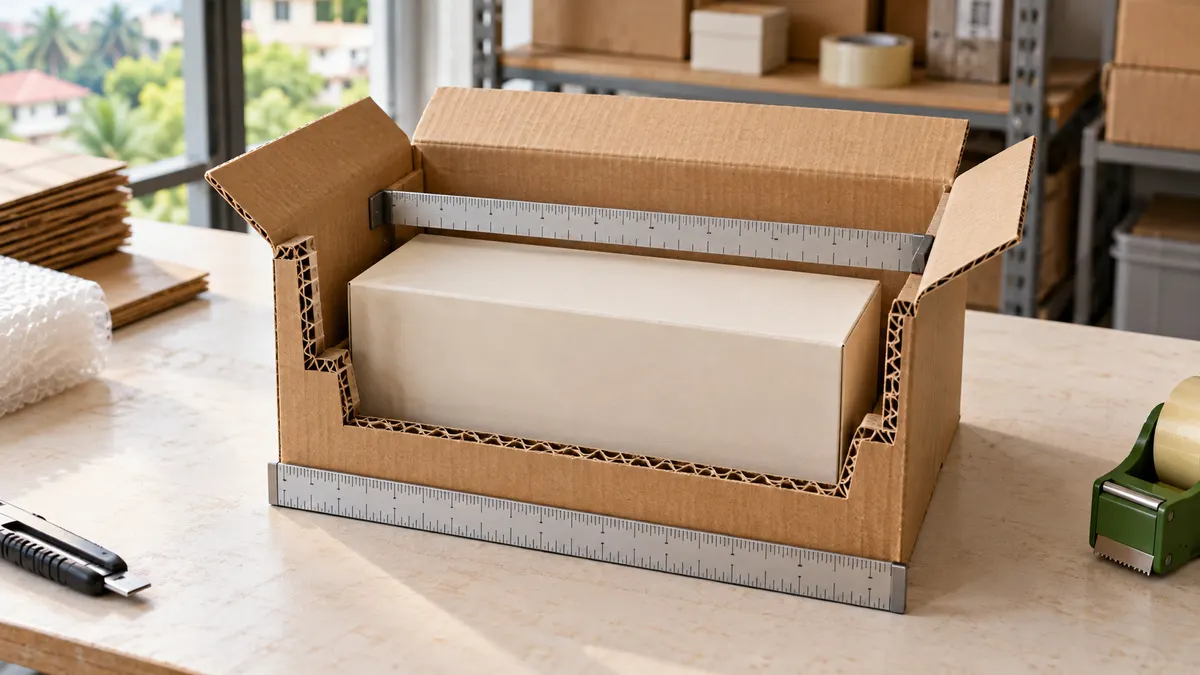
Packaging for fragile products may require several controls working together:
- Immobilisation to prevent momentum from building inside the pack
- Cushioning matched to the product’s weight and fragility
- Individual wrapping or separation between units
- Clearance from the outer walls, corners, and base
- Dividers, braces, or edge protection for concentrated loads
- A rigid outer container with adequate compression and puncture resistance
- Double-boxing when the distribution risk justifies it
A practical parcel configuration for a fragile item uses an inner box surrounded by approximately 8 cm of cushioning inside a larger outer box. That distance is a starting configuration, not a universal design rule. Cushion stiffness, product mass, drop height, box strength, and repeated impacts still need evaluation.
An oversized box is not automatically safer. Excess space can allow movement, increase dimensional weight, consume more void fill, and reduce pallet efficiency. An undersized box can remove protective clearance, overload panels, or transfer shocks directly to the product.
Irregular products require particular attention. A high centre of gravity may increase tipping, a sharp projection may puncture a wall, and a glass container may need separation from adjacent units as well as clearance from the shipping case. If the product must stay upright, packaging can encourage the correct orientation, but validation should still consider foreseeable inversion.
Design Containment For Liquids, Powders, Oils, And Leak Risks
Containment depends on more than the container body. The product, headspace, closure, liner, seal, filling process, orientation, temperature, pressure, and secondary protection all affect whether the finished pack remains secure.
For liquids, evaluate viscosity, volatility, chemical compatibility, closure torque, seal integrity, pressure changes, and the consequences of leakage. An upright bottle with an inner seal, suitable cap, and secondary packaging capable of containing a leak provides multiple controls rather than relying on one closure feature.
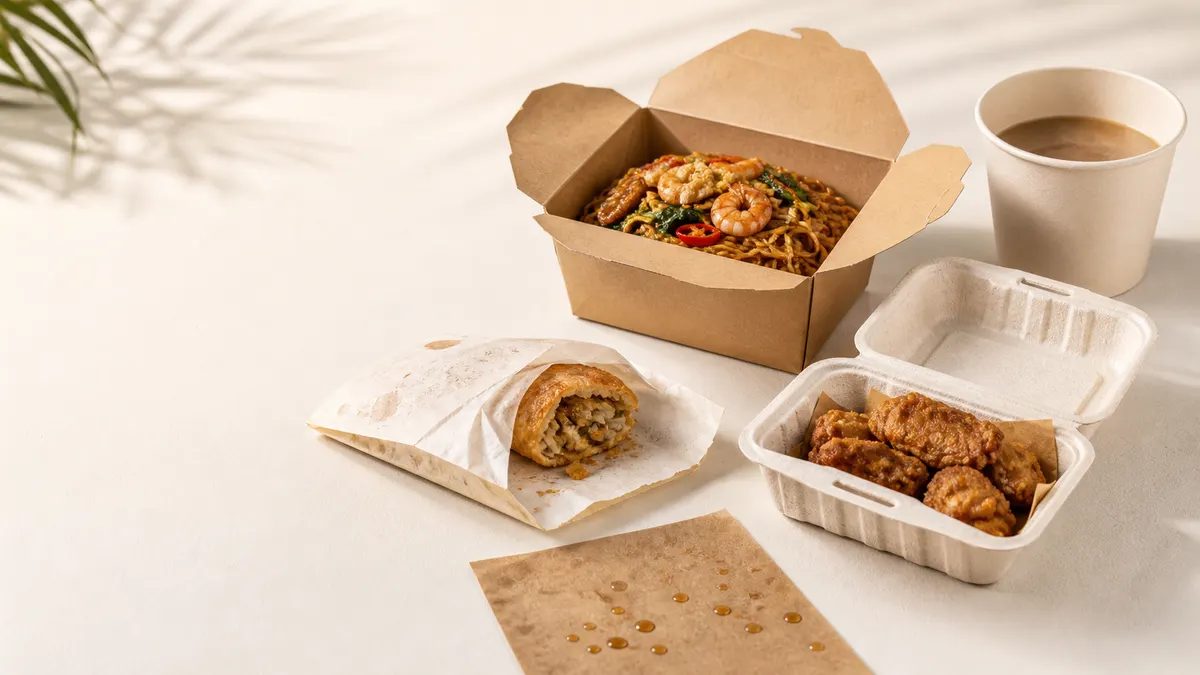
Powders create different problems. A pack can resist liquid leakage yet allow fine particles to sift through a closure or seal channel. Oil-rich products can stain paperboard, weaken adhesives, or migrate through materials that perform adequately with water-based products.
Conditional controls include induction seals, tamper-evident bands, absorbent material, sealed inner bags, trays, and secondary containment. Use them when the risk assessment justifies them; adding every possible component increases cost and can make opening or recovery more difficult.
Compatibility testing should include the product and every relevant contact component, including closures, liners, seals, adhesives, inks, and coatings. Assess the intended contact time, temperature range, processing conditions, and repeated-use pattern.
Make Packaging Material Selection Evidence-Based
Packaging material selection should compare candidate structures against the same requirement sheet. No material family is inherently the safest, cheapest, greenest, or most protective in every application.
For a broader introduction to common structures, see packaging materials and box types. When reviewing candidates for a specific product, focus on measured behaviour:
| Material family | Useful characteristics to evaluate | Common limitations to investigate |
|---|---|---|
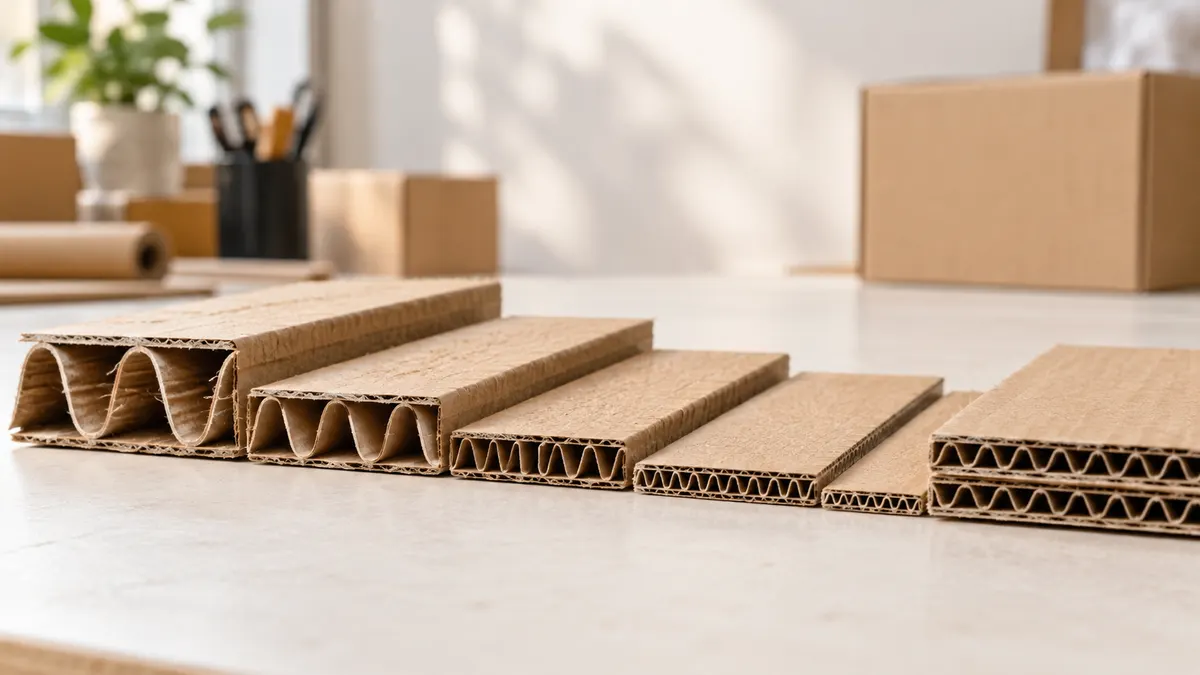
| Paper and paperboard | Stiffness, compression strength, print surface, folding, and fibre-based recovery | Moisture sensitivity, grease resistance, coating effects, and strength loss under humid conditions |
| Flexible films | Sealability, puncture resistance, tear behaviour, clarity, and moisture or gas control | Seal-window sensitivity, heat limits, recovery constraints, and damage from sharp products |
| Foil and metallised layers | Light control and strong gas or moisture barrier potential | Pinholes, flex cracking, crease damage, opacity, and multilayer recovery challenges |
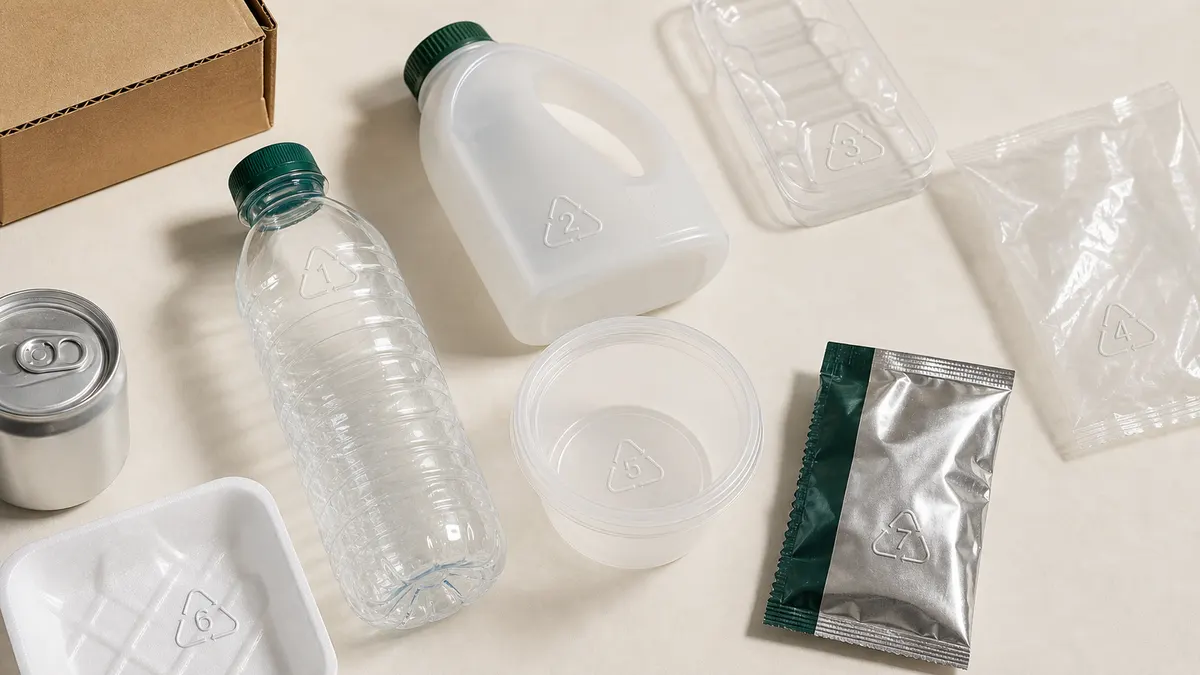
| Rigid plastic | Impact resistance, dimensional stability, closure options, and transparency | Chemical compatibility, heat response, colour or label effects, and local sorting constraints |
| Glass | Strong barrier performance, product compatibility, transparency, and potential reuse | Weight, breakage, thermal shock, closure integrity, and transport protection |
| Metal | Barrier performance, process tolerance, strength, and established recovery potential | Corrosion, coating compatibility, denting, and seam or closure control |
Coatings can improve grease resistance, moisture behaviour, sealing, scuff resistance, or print performance. Their presence can also affect repulping, sorting, compostability, or other recovery claims. The relevant question is not whether a pack is “coated,” but what the coating does, how much is used, and whether the complete structure suits the intended recovery route.
A disciplined answer to how to choose product packaging also considers production fit. Check forming and sealing windows, filling speed, line temperatures, inspection capability, supplier consistency, minimum order quantity, lead time, regional availability, and likely change-control needs.
A technically capable material can still be a poor choice if it cannot run consistently on available equipment or be supplied reliably at production scale.
Treat Food Safety, Labelling, And Traceability As Design Inputs
Food-contact packaging should be safe and suitable for its intended use under specified storage and use conditions. It should protect food against contamination and damage while allowing the necessary information to remain legible and attached.
Packaging can protect food during storage and transport, but contact materials may also transfer substances into food. Suitability therefore depends on product composition, contact time, temperature, processing, shelf life, repeated use, and foreseeable consumer behaviour.
Reserve enough printable or label area for product identification, date coding, handling instructions, traceability details, and other applicable information. Confirm readability after forming, sealing, condensation, abrasion, and distribution exposure rather than reviewing flat artwork alone.
Maintain supplier declarations, material specifications, lot identification, test evidence, approved samples, and change-control records. Traceability helps a business determine which packaging was used for a particular production lot and respond efficiently if a compliance or quality issue emerges.
Products sold in Malaysia or across ASEAN may be subject to different requirements according to their category and destination. Confirm current obligations with qualified regulatory sources rather than assuming that regional guidance replaces national rules.
Design For The Actual Handling And Distribution Channel
A retail carton, palletised case, courier parcel, cold-chain shipment, and export container face different combinations of hazards. Map the route from the packing line through warehouses, vehicles, transfer points, retail or delivery, consumer use, and any return journey.
Relevant hazards may include:
- Repeated drops and shocks
- Vehicle and conveyor vibration
- Stacking and compression over time
- Abrasion between packs or components
- Rain, condensation, and high humidity
- Temperature extremes and cycling
- Orientation changes and rough manual handling
- Pallet instability or concentrated loads
Motorcycle delivery, vans, regional road transport, air freight, and sea freight do not create identical conditions. A package may also pass through mechanised conveyors and manual transfer points within the same journey.
Packaging distribution testing evaluates the complete packaged product against representative channel hazards. Testing an empty box can describe aspects of the container, but it does not demonstrate how the product, cushioning, closures, seals, dividers, and outer pack interact.
E-commerce test protocols commonly combine vibration, shock, compression, temperature, and humidity exposures. The appropriate sequence and severity should reflect the intended channel, packaged-product mass, orientation, and known distribution data.
Temperature-sensitive products need a qualified system that includes the insulation, refrigerant arrangement, product load, pack-out instructions, expected duration, and ambient profile. Physical condition, thermal conductivity, and insulation performance can all form part of parcel-package validation.
Balance Protection With Size, Weight, And Logistics Cost
Packaging for product protection should use enough material and volume to control defined risks, but no more than the validated design requires. Reducing a panel, cushion, or barrier layer before testing may simply move cost from packaging into damage, spoilage, returns, or customer service.
Calculate actual weight and dimensional weight during concept evaluation. A commonly used parcel formula calculates dimensional weight in kilograms as:
Length × width × height in centimetres ÷ 5,000
For example, a 40 × 30 × 20 cm parcel produces a dimensional weight of 4.8 kg. Reducing it to 35 × 25 × 18 cm produces 3.15 kg, a reduction of about 34% even though the product itself has not changed. The applicable divisor and charging rules remain carrier- and service-specific, so verify them before making a commercial decision.
This is a useful reminder that empty air can have a measurable logistics cost. However, a smaller pack is an improvement only if it preserves the required clearance, cushioning performance, sealing, usability, and damage rate.
Review the complete logistics picture:
- Case count and cube utilisation
- Pallet pattern, stability, and overhang
- Storage and picking efficiency
- Void-fill consumption
- Actual and dimensional transport weight
- Packing time and line throughput
- Damage, leakage, complaint, and return rates
A heavier primary container may need less secondary protection. A lighter container may reduce outbound weight but require more bracing or cushioning. Compare complete systems rather than celebrating one isolated reduction.
Include Presentation And Usability Without Weakening Performance
Presentation is a legitimate requirement for retail, e-commerce, gifting, food service, and industrial products. It should be specified alongside protection rather than added after the structural and barrier design is complete.
Define opening force, tool-free access, dispensing, portion control, resealing, tamper evidence, theft deterrence, and accessibility needs. Test first opening as well as repeated use, especially when the closure is expected to maintain containment or product quality after opening.
Windows, foils, laminates, inks, adhesives, labels, and decorative coatings can affect sealing, scuff resistance, coding, sorting, and recovery. Graphics should account for folds, seams, panel distortion, date codes, labels, shipping marks, and areas covered by other components.
Studio prototypes reveal visual intent, not distribution performance. Evaluate shelf and unboxing presentation after the pack has experienced representative vibration, compression, humidity, and handling.
Keep objective and subjective requirements distinct. Barcode readability can be measured. “Premium feel” requires a defined evaluation method, audience, and approval process if it will influence the final decision.
Set Sustainable Packaging Criteria Without Greenwashing
Sustainable packaging criteria should account for product protection, material use, transport, reuse, collection, sorting, processing, and the conditions behind every environmental claim. A lighter package is not automatically a better package if it causes substantially more spoilage, leakage, breakage, or returns.
Source reduction, reuse, refill, recycled content, renewable inputs, recyclability, compostability, biodegradability, and energy recovery are different attributes. None should be treated as a general synonym for “environmentally friendly.”
For each candidate, ask:
- Can the components be collected in the market where the package becomes waste?
- Can available systems sort the material into an appropriate stream?
- Do labels, closures, liners, coatings, adhesives, colour, or residues interfere?
- Must the consumer separate components, and is that action realistic?
- Is a specialised facility required?
- Does a certification or test cover the complete package or only one material?
- Could a multilayer structure be justified by a meaningful reduction in product loss?
Malaysia’s recovery conditions vary by location, waste stream, collector, and processing route. Technical recyclability does not guarantee practical recovery. A responsible assessment should reflect whether waste is post-consumer or industrial and how it is collected, sorted, and processed locally.
Claims such as “recyclable,” “biodegradable,” “compostable,” and “plastic-free” do not mean the same thing. A credible claim states the relevant geography, collection or facility condition, evidence basis, exclusions, and action required from the user.
Packaging reduction is not progress when the missing material reappears as damaged or wasted product.
Convert Requirements Into A Specification And Validation Plan
The practical answer to how to choose product packaging is a controlled process rather than a single material decision. The following sequence gives product teams and suppliers a common basis for evaluation.
Define the product. Record composition, dimensions, weight, physical state, fragility, compatibility risks, value, intended shelf life, and use pattern.
Define the conditions. Describe filling, sealing, storage, climate exposure, distribution route, retail environment, consumer use, and possible returns.
List failure modes. Include leakage, breakage, crushing, moisture gain, oxidation, light damage, contamination, tampering, coding failure, and poor opening.
Set measurable acceptance criteria. Specify relevant barrier values, seal strength, leak resistance, compression, drop performance, thermal duration, dimensions, legibility, and permitted damage.
Assign functions by packaging level. Decide which primary, secondary, and tertiary components will provide containment, barrier, structural protection, communication, and handling support.
Screen candidate systems. Compare evidence, production fit, availability, cost, logistics, usability, presentation, compliance, and recovery compatibility.
Prototype and test. Use representative products, production-equivalent seals, realistic ageing, and actual or justified simulated distribution hazards.
Run a limited trial. Check packing speed, leakage, damage, shelf presentation, complaints, returns, and disposal communication before committing to full volume.
Approve and control. Record the specification, inspection limits, evidence, approved suppliers, traceability method, and process for reviewing changes.
A Practical Decision Matrix
Score each candidate against the same fields: product compatibility, barrier, structural protection, transport performance, food-contact evidence, usability, presentation, unit cost, dimensional weight, availability, recovery compatibility, test status, and unresolved risk.
Do not hide a critical failure inside an average score. A package that is inexpensive, attractive, and readily recyclable still fails if it cannot safely contain the product.
Two Short Examples Of Requirements-First Decisions
Example 1: Dried Food Sold Through Retail And Parcel Delivery
The food absorbs moisture and loses crispness. The chosen system uses a sealed inner barrier pack for shelf-life control, a carton for crushing and light protection, and a shipping configuration tested with the complete product.
A paper-only preference was considered but not accepted without evidence that it could maintain the specified product condition. The final design can still pursue fibre reduction, coating improvements, and recovery compatibility without treating material preference as a substitute for barrier performance.
Example 2: Glass Bottle Containing An Oily Liquid
The main failure modes are closure leakage, glass breakage, staining, unit-to-unit contact, and movement during parcel handling. The system combines a compatible closure and inner seal with secondary containment, unit separation, cushioning, and an outer box suitable for the loaded weight.
The design is tested after temperature exposure and in foreseeable orientations. Decorative finishes are reviewed for abrasion and recovery effects after containment and transport requirements have been met.
Frequently Asked Questions
Is Paper Always The More Sustainable Option?
No. Paper may offer useful renewable-fibre and recovery attributes, but performance depends on structure, coatings, product protection, transport weight, local collection, and actual processing. Compare complete systems under the same conditions.
When Is A Laminate Justified?
A laminate may be justified when combined layers provide a necessary barrier, seal, strength, or processing function that a simpler structure cannot deliver reliably. The benefit should be weighed against separation and recovery constraints.
How Much Cushioning Is Enough?
There is no universal thickness. Cushioning must be matched to product mass, fragility, geometry, expected drop severity, available clearance, and cushion behaviour under repeated impacts and environmental exposure.
Does A Hermetic Package Guarantee Shelf Life?
No. Hermetic integrity controls atmospheric oxygen pickup and moisture exchange while the package remains intact, but shelf life can also depend on initial product condition, processing, temperature, light, internal atmosphere, contamination, and other reactions.
Can Recyclable Packaging Use Coatings?
Possibly. The coating type, quantity, substrate, residues, local sorting, and reprocessing route determine compatibility. A claim should cover the complete finished package under the conditions where it is likely to become waste.
Which Tests Should A Business Use?
Choose tests from the actual failure modes and channel hazards. Barrier, compatibility, seal, leak, compression, drop, vibration, thermal, ageing, legibility, and user tests may be relevant, but not every project needs every test.
Make The Requirement Sheet The Shared Source Of Truth
If your team is deciding how to choose product packaging, complete the requirements matrix with the product owner, packaging supplier, operations team, and relevant technical or regulatory specialists before ordering production quantities.
Start with the highest-consequence failure, define the conditions under which it could occur, and record how the proposed packaging controls and validates that risk. That single discipline turns a subjective material debate into a decision the business can test, explain, and improve.