
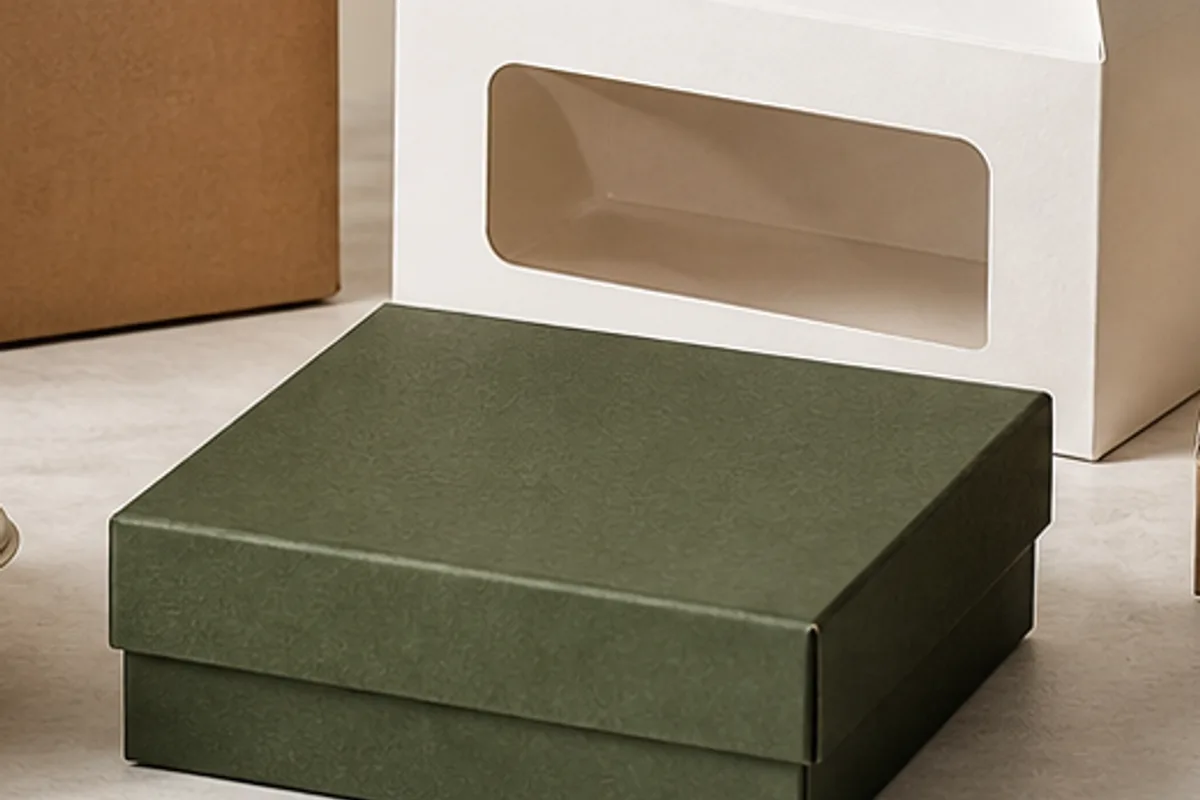
Rigid boxes for premium presentation
An educational guide to set-up box structure, thick board, wrapped surfaces, inserts, and perceived value.
What makes rigid boxes different
Rigid boxes are set-up structures that usually arrive pre-formed rather than flat-packed. They are used when presentation, hand feel, and durable structure matter more than low storage volume.
Performance depends on board thickness, wrap material, lid fit, corner quality, inserts, and how the box will be handled after opening.
Set-up construction
The box keeps its shape before packing, creating a sturdier presentation than folded cartons.
Thick board walls
Dense board creates weight, edge definition, and a premium hand feel.
Wrapped finish
Paper, cloth-like, textured, or printed wraps change the visual and tactile result.
Where rigid boxes perform best
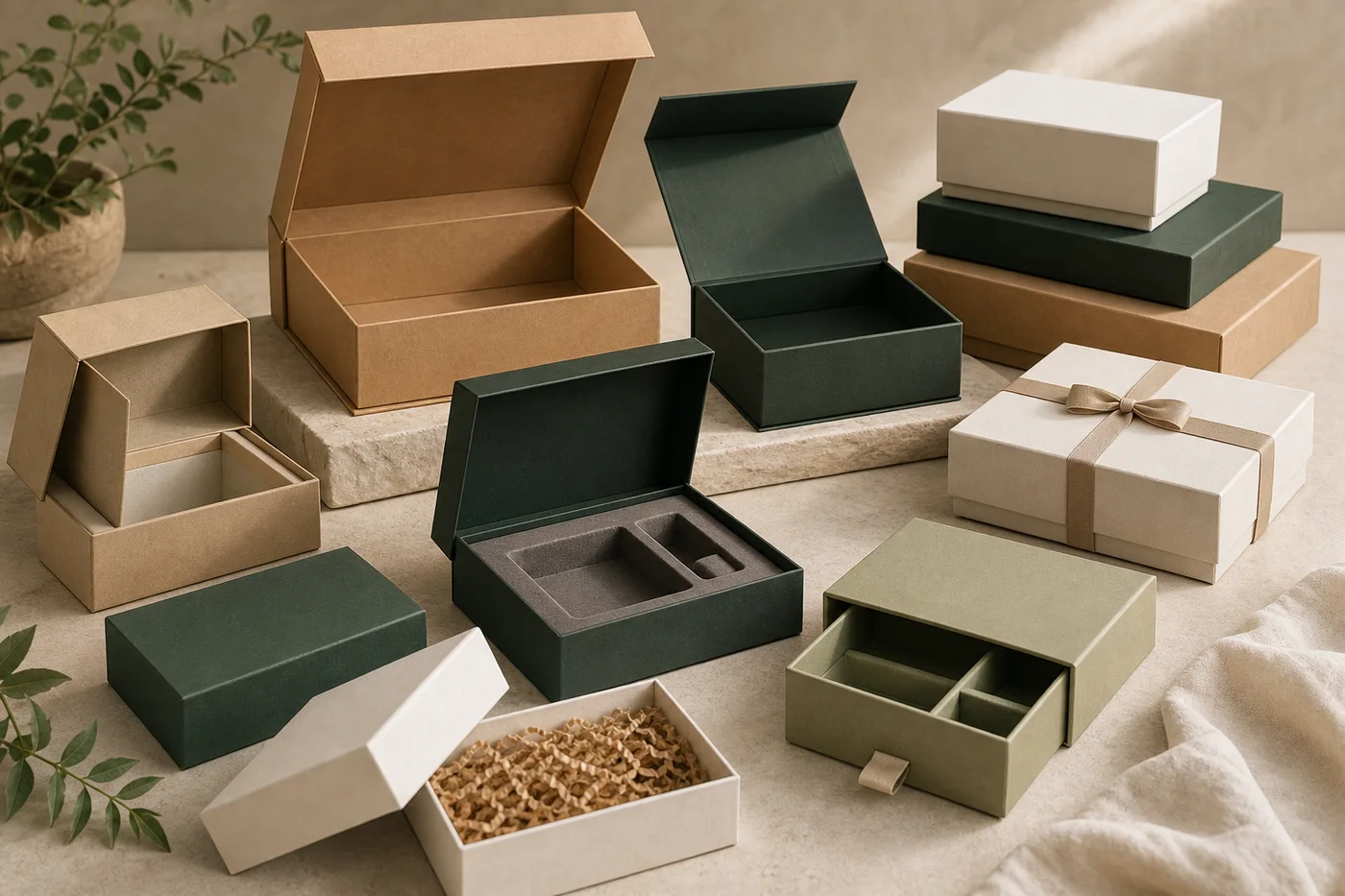
Gift and launch packaging
Supports a higher perceived value when opening and presentation are central.
Premium retail goods
Common for cosmetics, accessories, electronics, and limited edition kits.
Keepsake storage
Durable walls can encourage reuse for documents, sets, and personal items.
Insert-led presentation
Works with foam, molded fiber, paperboard, or fabric inserts for precise reveal.
How to study the right rigid box
Compare perceived value, storage cost, wrap finish, insert fit, and shipping protection together.
Define the experience role
Decide whether the box is gift, display, keepsake, launch kit, or secondary protection.
Check lid and wall tolerance
Review lid friction, corner build, wall straightness, and edge alignment.
Choose wrap and finish
Compare paper wrap, texture, lamination, foil, embossing, and scuff resistance.
Plan outer shipping
Rigid boxes often need a shipper or sleeve to protect their finish in transit.
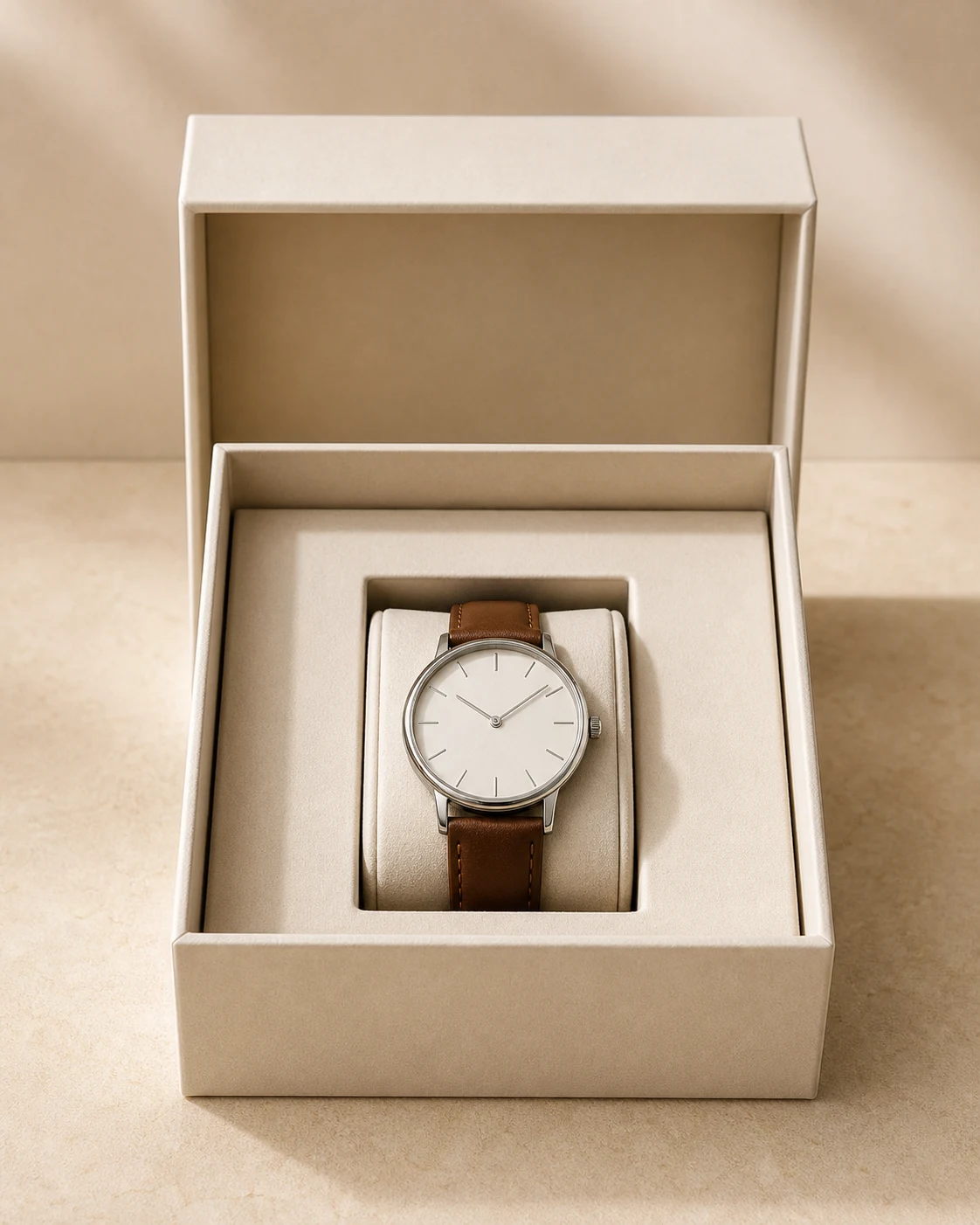
Rigid boxes FAQs
Short educational answers for comparing structure, material, use case, and buying risk.
Are rigid boxes shipped flat?
Most rigid boxes are set up before use, so they take more storage and freight volume than folding cartons.
Why are rigid boxes more expensive?
They use thicker board, more converting steps, wrapping, assembly time, and often custom inserts.
Can rigid boxes be sustainable?
That depends on board, wrap, adhesives, coatings, reuse potential, and whether materials can be separated or recovered locally.
Do rigid boxes protect products by themselves?
They provide structure, but fragile products still need inserts, cushioning, and sometimes an outer shipper.