
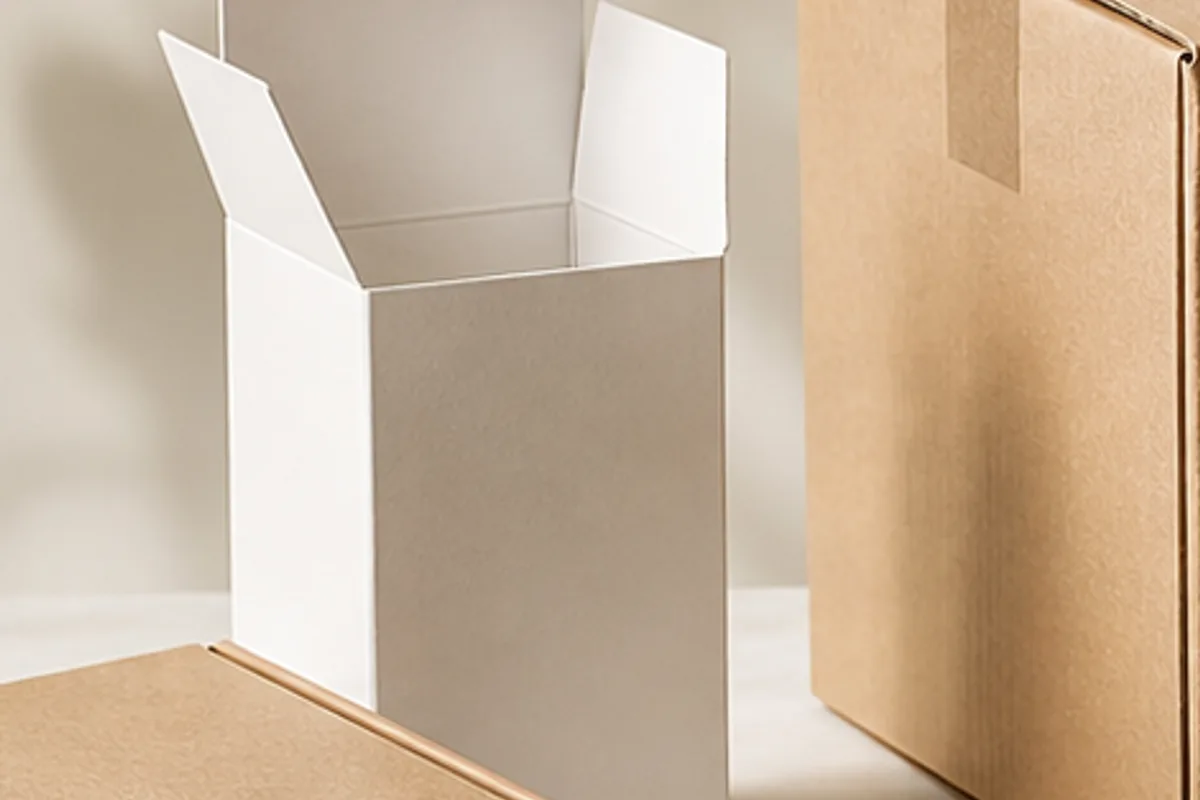
Folding cartons for printed retail structure
An educational guide to paperboard panels, tuck closures, fold quality, caliper, and shelf presentation.
What makes folding cartons different
Folding cartons are flat-packed paperboard boxes that are creased, folded, and closed around light to medium products. They are common where printed panels and shelf visibility matter.
Performance depends on board caliper, grain direction, scoring, closure style, product weight, coating, and how the carton is assembled.
Flat-packed efficiency
Cartons store and ship flat before assembly, reducing unused space before packing.
Printable paperboard surface
Smooth panels support branding, instructions, small type, and finish treatments.
Closure variety
Straight tuck, reverse tuck, lock bottom, sleeves, and tabs all change assembly and use.
Where folding cartons perform best

Cosmetics and personal care
Common for light retail products where surface finish and panel design matter.
Supplements and dry goods
Useful for bottles, sachets, pouches, and dry packaged products with inserts.
Small electronics accessories
Works when board and insert choices support light protection and clear presentation.
Printed sleeves and kits
Can organize sets, wraps, and secondary packaging around another primary container.
How to study the right folding carton
Study product weight, panel role, closure style, and fold behavior before comparing board grades.
Define panel requirements
Separate front display, side copy, legal text, barcode, and instruction panels.
Compare caliper and stiffness
Board thickness and construction affect standing shape, hand feel, and assembly quality.
Check scoring and grain
Fold samples to catch cracking, springback, and panel misalignment before production.
Test closure and fill
Confirm tuck tabs, lock bottoms, inserts, and product loading work in the actual packing flow.

Folding cartons FAQs
Short educational answers for comparing structure, material, use case, and buying risk.
What are folding cartons made from?
They are usually made from paperboard, selected by caliper, stiffness, coating, and print needs.
Are folding cartons good for shipping?
They are usually secondary retail packaging. Shipping may require an outer carton, mailer, or cushioning.
Why do folds crack on cartons?
Cracking can come from coating, heavy ink, grain direction, dry conditions, or unsuitable scoring.
Can folding cartons be recyclable?
Many clean paperboard cartons are recoverable, but coatings, foil, windows, residue, or mixed layers can affect sorting.