

Display boxes for shelf-ready presentation
An educational guide to open-front structure, product visibility, retail access, panel strength, and replenishment.
What makes display boxes different
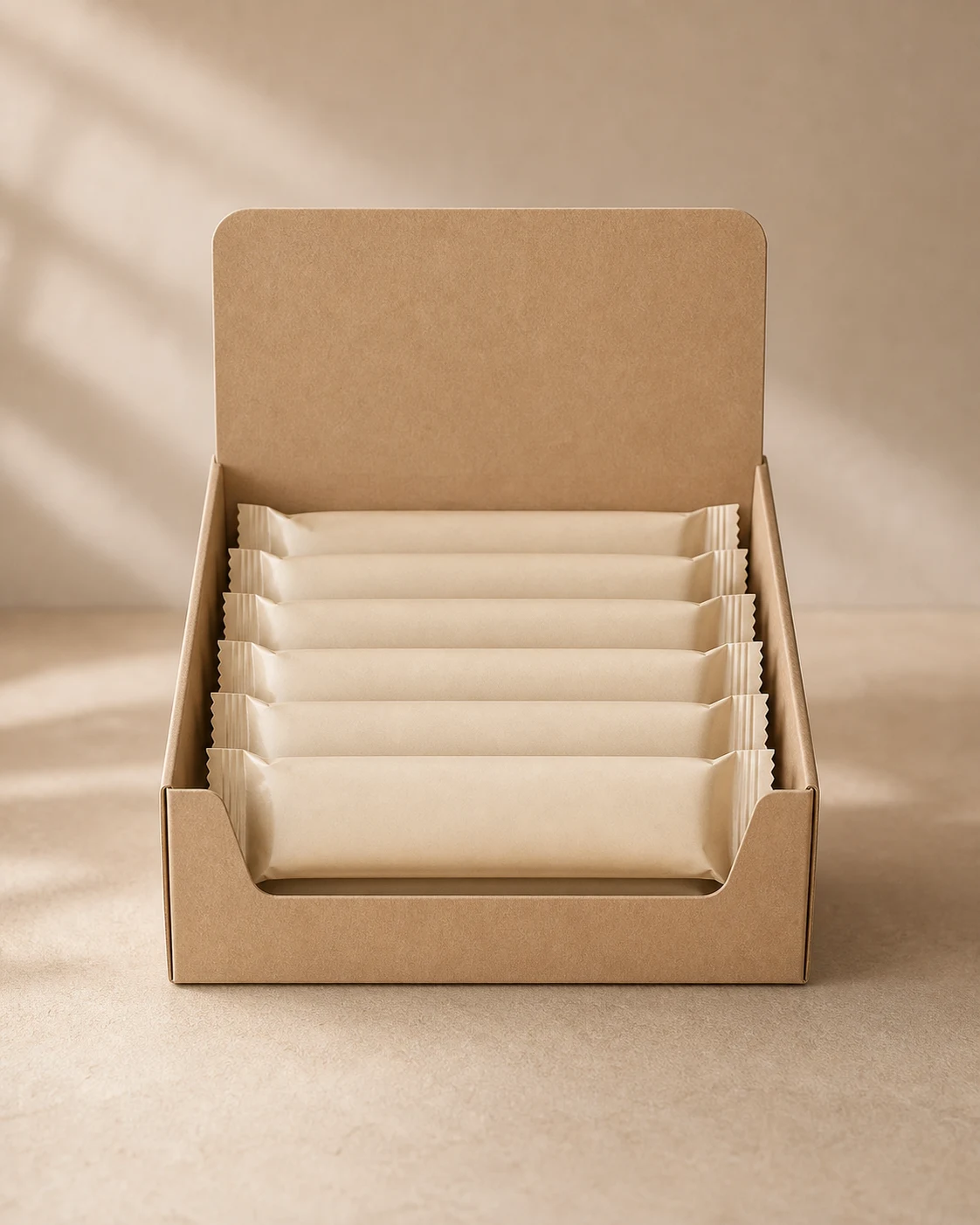
Display boxes are designed to hold products while keeping them visible and accessible on a counter or shelf. They combine packaging, organization, and merchandising roles.
Performance depends on board stiffness, front lip height, side panel shape, tear-away behavior, product weight, replenishment, and how customers remove items.
Open presentation
A cutaway or tray-like structure keeps products visible and reachable.
Front-panel control
Lip height and panel stiffness stop products from sliding while keeping labels visible.
Retail handling strength
The display must resist stocking, customer removal, and shelf movement.
Where display boxes perform best

Counter displays
Useful for small items near checkout, samples, sachets, and promotional packs.
Shelf-ready trays
Ships and displays products in one structure after opening or tear-away conversion.
Product assortments
Keeps multiple variants organized while supporting quick comparison.
Launch and promo sets
Can highlight limited runs, seasonal products, or grouped merchandising stories.
How to study the right display box
Study retail placement, product access, panel strength, replenishment, and print visibility.
Define shelf position
Countertop, shelf, peg, and endcap placements have different viewing and handling needs.
Check product access
Customers should remove items without collapsing dividers or hiding remaining products.
Test front lip and side panels
Loaded displays need enough stiffness to keep products contained and visible.
Review print hierarchy
Brand, variant, price cues, and instructions must remain visible after the display is loaded.
Display boxes FAQs
Short educational answers for comparing structure, material, use case, and buying risk.
What is a display box?
It is packaging that also works as a retail display, often with an open front, tray, or tear-away structure.
Can display boxes be used for shipping?
Some are shipped inside an outer case, while shelf-ready structures may need tear-away panels or added protection.
What material is common for display boxes?
Paperboard and corrugated board are common, chosen by product weight, display size, and retail handling needs.
Why does front lip height matter?
It keeps products from sliding out while preserving enough visibility for labels and product recognition.